


Page 36 - ASCO Cultural Competency Toolkit
P. 36
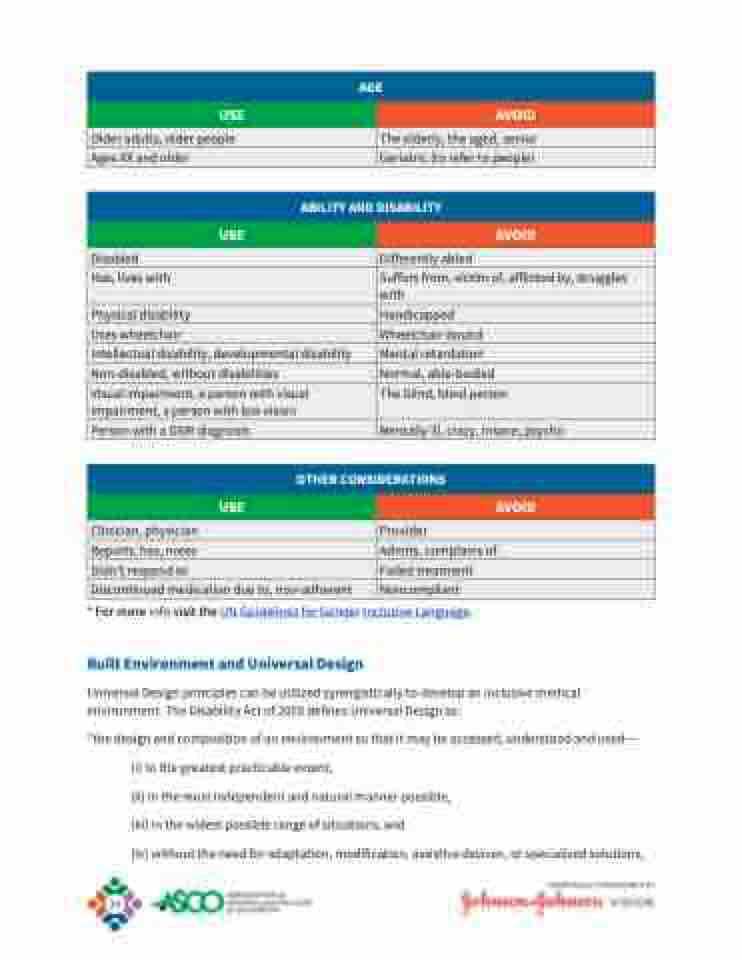
  AGE
  USE
  AVOID
  Older adults, older people
   The elderly, the aged, senior
  Ages XX and older
  Geriatric (to refer to people)
   ABILITY AND DISABILITY
  USE
  AVOID
  Disabled
   Differently abled
  Has, lives with
 Suffers from, victim of, afflicted by, struggles with
  Physical disability
   Handicapped
  Uses wheelchair
  Wheelchair-bound
  Intellectual disability, developmental disability
 Mental retardation
  Non-disabled, without disabilities
   Normal, able-bodied
  Visual impairment, a person with visual impairment, a person with low vision
 The blind, blind person
  Person with a DSM diagnosis
   Mentally ill, crazy, insane, psycho
   OTHER CONSIDERATIONS
  USE
  AVOID
  Clinician, physician
  Provider
  Reports, has, notes
  Admits, complains of
  Didn’t respond to
  Failed treatment
  Discontinued medication due to, non-adherent
   Noncompliant
 * For more info visit the UN Guidelines for Gender Inclusive Language. Built Environment and Universal Design
Universal Design principles can be utilized synergistically to develop an inclusive medical environment. The Disability Act of 2005 defines Universal Design as:
“the design and composition of an environment so that it may be accessed, understood and used— (i) to the greatest practicable extent,
(ii) in the most independent and natural manner possible,
(iii) in the widest possible range of situations, and
(iv) without the need for adaptation, modification, assistive devices, or specialized solutions,
  GENEROUSLY SPONSORED BY
  34


