
Spring Institute for Faculty Development
Building on the Association of Schools and Colleges of Optometry’s major initiative to address its strategic objective of “Faculty Promotion and Development,” the Spring Institute for Faculty Development (SIFD) was established in 2006 for the purpose of “providing participants with an opportunity to gain the necessary knowledge and skills to enhance their success in an optometric academic environment as lifelong productive faculty, thus contributing to increased retention of faculty in the schools and colleges of optometry.”
This program attracts the most promising faculty from the schools and colleges of optometry who have been full time faculty members greater than 2 years but less than 10 years. The SIFD promotes active learning in a nurturing environment and is comprised of formal presentations, workshops and shared activities in the areas of teaching and learning, scholarship and academic culture. Each attendee develops a long-term career plan with specific goals, objectives and action strategies. Attendees are mentored in this process by the program leadership and other attendees.
What Faculty Had To Say About Prior Meeting:
“It significantly helped me with giving me the tools to get promoted. It also gave me guidance that has helped me become a better educator and researcher.”
“It gave me the tools navigate the world of academia which I had no experience with.”
“Extremely useful. Much better understanding of the profession and academia optometry after the SIFD.”
“I have a fantastic mentor with whom I still keep in touch.”
“It put me in contact with nationally recognized mentors who were able to impart their experiences in academia.”
“It gave me better direction. It helped me learn what is and isn’t important in an academic career. It had a significant impact on my career thus far.”
The SIFD is reformatted into a year-long program that includes virtual and in-person sessions. The in-person program was held on April 3-5, 2025 in Rochester, NY.
ASCO is not accepting applications at this time. Applicants must receive approval from their Dean/President prior to applying.
Please contact Mollie Mills for additional details.
Program Overview
ASCO Spring Institute for Faculty Development (SIFD)
Institute goals:
- Provide participants with an opportunity to gain the knowledge and skills necessary to enhance their success in an optometric academic environment as career-long, productive faculty members.
- Contribute to increased retention of faculty in the schools and colleges of optometry. The SIFD represents a major initiative by ASCO to address its strategic priority for “Faculty Promotion and Development.”
Targeted participants:
Colleagues who have been full time faculty members for greater than 2 years but less than 10 are the targeted participants. Approximately 45 total participants are anticipated. Each institution is assured of at least one faculty member participating, and that individual may be designated by the President/Dean. Other interested faculty members may complete the application process; all applicants must be approved by the institution’s President/Dean or their designee.
Participant application process:
The application period runs from September to November. Applicants will be required to submit an application, short biography, head shot, and CV (in a format preferred by their institution for promotion and tenure purposes). Materials will be reviewed and selected by representatives from the SIFD program committee.
Those accepted into the program commit to participate in a variety of pre- and post-Institute program activities.
Funding:
ASCO and multiple corporate sponsors have generously supported the SIFD; thus, the hotel and most of the meal functions are funded for participants. The schools and colleges are asked to fund the airfare, ground transportation, incidentals, and registration fee for all participants.
Three specific areas will be addressed:
1) Teaching and Learning
2) Scholarship
3) Academic Culture
Keynote speakers and program facilitators will present topical areas for discussion. Formal presentations, workshops, small group discussions, and shared activities will comprise the Institute. Each attendee will develop a long-term career plan with specific goals, objectives and action strategies. Attendees will be mentored in this process by the program faculty and other attendees. The impact of the program upon each participant will be evaluated both at the conclusion of the program and over the ensuing year. Participation on the longer term outcome assessment is an obligation of all attendees.
Schedule:
Pre- and Post-Institute Webinars
Selected participants should be prepared to participate in pre- and post-Institute webinars. The schedule is still developing; however, at a minimum, the webinar listed below will be held prior to the program.
- Syllabus and Course Development
- Importance of course syllabus
- How to construct syllabus
- Writing student learning objectives
- Blooms adapted learning objectives
- Developing course to meet lecture hours for credit/lab
Spring Institute for Faculty Development
Academic Culture & Scholarship
- Finding Your Path in Academia (Panel)
- Academic Culture
- Clinical track versus tenure track
- Private school versus public school
- Promotion
- Governance
- Publishing
- Determine your audience
- Impact factor
- Citations
- Writing tips
- Submitting manuscripts
- Review process
- Responding to reviews
- Timeline
- Reviewing manuscripts
- Research
- Building a Research Question
- What is IRB?
- Participant-Mentor Program Meetings
Teaching and Assessment
- Using Process Oriented Guided Inquiry Learning (POGIL)
- Examine the POGIL framework and become familiar with the research literature that is relevant to graduate education
- Experience first-hand and develop ideas for using POGIL in your class
- Advancing Learning in Clinical Settings
- Explore key elements of effective precepting, including strategies for understanding students’ expectations and clarifying your own, building rapport with your students, and working with diverse individuals.
- Identify techniques for enhancing your students’ abilities to use critical-thinking and problem-solving skills to apply prior learning and new information when performing successful differential diagnoses.
- Practice tactics for giving students rich feedback to further advance their learning.
- Developing and Delivering Effective Presentations
- How to get in CE circuit
- How to entice participants
- How to make the presentation clear
- How to Write Effective MCQs
Test Construction and Item Analysis
- Proper construction of MCQ
- Create MCQ that target different cognitive levels
- Common flaws in construction of MCQ
- How to recognize a “good, poor performing, etc” MCQ item
- Specific examples
- Quality assurance for MCQ
- Participant-Mentor Program Meetings
Promotion and Tenure
- How to Build the Dossier
- Timeline in preparation
- Importance of writing the narrative
- What should and should not be included as evidence
- Who to list as references and why
- Mock Tenure and Promotion Panel Discussion: Review of Fictitious CVs
- Break-out Group Discussions: Suggestions to Enhance Your CV and Scholarly Portfolio
- Participant-Mentor Program Meetings
- Closing Reception
Meet SIFD's Program Leadership
Co-Chairs
David Damari, OD
Clinical Professor
The Ohio State University College of Optometry
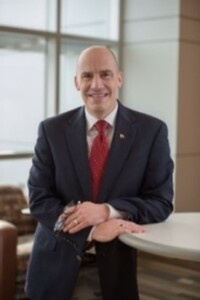
After graduating from SUNY College of Optometry in 1983 and completing a residency in Vision Therapy Rehabilitation there, Dr. Damari was in private practice in Rochester, New York.
Throughout his time in private practice, Dr. Damari maintained his connection to optometric academia as an Assistant Clinical Professor at SUNY, a consultant to the National Board of Medical Examiners (NBME) to assist in providing access to the United States Medical Licensing Examination for medical students with visual disabilities, and as a Peer Reviewer for the NBME Medical Education Research Fund. He embraced academia full time in 1997 at Southern College of Optometry, eventually becoming a Professor and Chair of the Department of Assessment, responsible for institutional review, measures of academic outcomes, and regional and professional accreditation.
From 2013 to 2021, Dr. Damari was the Dean at the Michigan College of Optometry at Ferris State University. He is a past president of the Association of Schools and Colleges of Optometry, a Fellow and past president of the College of Optometrists in Vision Development, and a Fellow of the American Academy of Optometry. He is the only active optometrist to have completed the Fellow-in-Residence program at the National Board of Examiners in Optometry (NBEO).
At Ohio State Optometry, his focus is on the assessment of patients with visual dysfunction and disabilities that limit individuals’ capabilities at work, school, or athletics. He can partner with those patients to overcome those obstacles through vision therapy and effective accommodations under the Americans with Disabilities Amendments Act.
“I am thrilled join the remarkable faculty and staff at The Ohio State University College of Optometry,” said Dr. Damari. “For over 100 years, Ohio State has been educating some of the finest doctors of optometry and vision scientists in the world, and I am gratified to now be part of that tradition of excellence.”
Dean Karla Zadnik, OD, PhD, noted, “Dr. Damari’s enthusiasm is matched by the College of Optometry. We are delighted that he has joined our clinical faculty and look forward to our students benefitting from his experience and expertise.”
Diane Russo, OD, MPH, FAAO, Diplomate (PHEV)
Associate Professor
New England College of Optometry
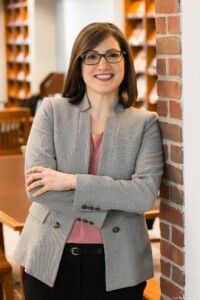
Dr. Diane Russo is an Associate Professor in the Department of Primary Care at New England College of Optometry. She is Instructor of Record for the public health course sequence. She is also an Attending Optometrist at the Codman Square Health Center in Boston where she precepts second, third, and fourth year students.
Dr. Russo received her OD from SUNY College of Optometry, her MPH from the Harvard T. H. Chan School of Public Health, and received residency training at the West Haven VAMC. She is Chair-Elect for ASCO’s Public Health Educators Special Interest Group (SIG) and is an active member of the AOA and Massachusetts Society of Optometrists, serving on the Health Promotions Committee and Legislative Action Committee, respectively.