
Eye on Optometry Blog SUBSCRIBE TO EMAIL UDATES


Meet Dr. Fraser Horn, ASCO President
A Short Conversation with Dr. Fraser Horn, ASCO President
During ASCO’s Annual Business meeting in June, ASCO swears in a new President for the upcoming 12 months. This year, Dr. Fraser Horn was sworn in as ASCO’s President.
Dr. Horn is the Dean of the College of Optometry at Pacific College of Optometry. He also has taught in the Sports and Recreational Vision, Ocular Disease I, Applied Ocular Therapeutics, Biomedical Ethics and Ocular Emergencies courses.
Dr. Horn chatted with ASCO’s Communications intern, Jannah Said, to talk about the upcoming year.
ASCO: Dr. Horn, congratulations on becoming ASCO President. How is 2024 treating you far? Do you have any upcoming plans or goals for these next several months?
Dr. Fraser Horn: So far, knock on wood, it’s been busy, but good. Personally, I’ve told myself I was going to do more self-care this year, but that has not gone to plan. We have been busy with accreditation for Pacific University, the role of President for ASCO, and the typical day-to-day work. In addition, we have two sons and so we have been busy outside of work, too. My main goal for this year is to continue to work alongside our colleagues to promote ASCO’s public awareness campaign, Optometry Gives Me Life. In addition, a personal goal is to set aside more time to be with family and friends.
ASCO: I understand you have a specialized background in sports vision. Is that true? What sparked your interest in sports vision and how has that impacted your perspective on the field and practice of optometry?
FH: My interest got sparked when I was a senior in high school. Then in undergrad at Pacific, I was involved with some research, where I realized how much fun it is to look at the visual skills for anybody who is performing in a sport or activity, and figure out, “how can we maximize those? How can we enhance those?” It’s a little bit of a different view when it comes to optometry. It’s so much fun. I’ve been able to work with individuals who have been told all their lives, “You have amazing vision. You can’t see any better.” We look and we go, “ah, we have an opportunity here, and we might even be able to make you faster or have quicker reaction times,” and take them to the next level. I feel very fortunate with having support from my family as well as my colleagues to be able to do some fun, crazy things. I consulted for Nike for a while. I continue to do sports vision today with our team here. Anybody in our chair is an athlete, whether you’re a competitive basketball player or if you do competitive cross-stitching at the nursing home, my job is to maximize your vision.
ASCO: You also completed a residency in primary care and ocular disease. How did your residency add to your education?
FH: I think the beauty of the residency was that it really enhanced my ocular disease and systemic disease knowledge base. I was at the Perry Point VA, so I was able to see patients who had advanced disease and also help those at the beginning of the disease. It also really helped me with communication. You can be the best diagnostician, but if you cannot communicate with your patients, you cannot do anything for them. Once I was done with my residency, I had way more confidence. Just like confidence helps an athlete in their performance, a confident doc is able to better help patients.
ASCO: Thank you. Let’s talk a little about ASCO. What are you looking forward to most as President of ASCO? What will be some of your top priorities this year?
FH: The staff is amazing at ASCO, and it’s been an honor to follow Dr. Colip, who was a wonderful president. I’m looking forward to working with the team and being able to represent so many administrators, faculty, and staff throughout ASCO and all our schools and colleges of optometry. I’m looking forward to being able to help ASCO continue building on our success of Optometry Gives Me Life. We saw some amazing growth this past year, and I hope we will continue to see that throughout this year. Hopefully we can deepen our partnerships. For example, National Optometric Association is looking at recruitment within Historically Black Colleges and Universities, and we would love to discuss ways we can collaborate and make it a synergistic relationship. In addition, we want to continue to work with all of our other partners to make sure we are supporting the profession of optometry.
Making sure that we are maximizing our relationships with other organizations, letting them know that we are here to help the profession, and making sure that we continue to grow with our future colleagues.
The other piece I’m excited about is our task force that is looking to update the document that describes the attributes of our graduates from optometry schools and colleges. Their work will help to elevate the goals that we have within optometric education and will help to promote the important work and the qualifications of our graduates.
ASCO: Let’s get to know you on a personal level better. Why did you choose the career of optometry? Tell me more about your path to you becoming the Dean of Pacific College of Optometry. What did you find most appealing about the field of optometry, particularly academia?
FH: My brother and sister-in-law are both optometrists, and when they were optometry students, they used to practice some basic skills on me. I was curious, and that’s kind of what got me into optometry. I realized pretty early on the variety of opportunities that optometry provides. During my first year after residency, I had wonderful experiences in academia, research, and private practice. All of these really shaped my future. When I was working with students, I realized how fun it is. They will ask me questions that no patient will ask. They will make me a better doctor. In addition, to see us as a team at Pacific, similar with any optometry program, educate students who will be our colleagues is a very rewarding experience. If I was in private practice, I would help a community. Now, I help multiple communities in educating the future providers for their area.
In addition, life doesn’t stop when students are in optometry school and there are some major life events that occur. I have been honored to work with students who are going through challenging times, both academically and/or personally. To see those who were struggling work hard and become successful is a true honor for me to be even a small part of that. I’m so proud of knowing that they persevered. It’s so awesome.
I’m where I am because of everybody else I work with. It’s nothing amazing I’ve done as much as just listening and working alongside everyone. Hard work and teamwork have been the key for our success.
ASCO: As a pre-optometry student myself, I’m curious to know how you would describe the academics and culture at Pacific. What can applicants look for from Pacific, and what is Pacific Optometry looking for in applicants?
FH: I love this. We can talk for a long time about what’s so awesome about Pacific, as I am sure that all leaders can spend ample time to promote their own program. We provide a very well-rounded education, so we want you to be able to help anybody who’s sitting in your chair after graduation. It doesn’t mean you’re going to manage every single case, but it means that you know who you’re referring to and what they’re doing so you can communicate that with your patient. We have faculty that truly care. By a few weeks they know when a student is missing class and can check in. They’re here for your success. Students become really good friends with faculty, staff and with each other. What we’re looking for in students, is that they’re well rounded, can communicate, and care about their community. It shows with how many of our students do outreach within local communities and global communities. We’re looking for individuals who are willing to go do a little bit extra for their community. A 4.0 GPA and great OAT scores are awesome; but we also are looking for someone who is going to make a great impact on their community.
ASCO: Thank you. Speaking of Oregon and the Pacific Coast, what are some of your favorite places to go? What would you recommend people visit when they are in town?
FH: If you have not been out here, you’ve got to come out here. Pacific University is really close to the heart of wine country. Within an hour and a half, you can be in multiple different ecosystems. An hour west is the coast, we love going to a town called Pacific City, a small town near Tillamook, which has famous cheese and ice cream. Our coasts are completely different than other coasts, so don’t expect it to be similar to California, Florida, or Hawaii. Further south you will be in wine country, and if you keep going you will travel through the Willamette Valley. If you go east, you get to the mountains, great for outdoor activities year-round, including hiking, skiing, snowboarding, and more. Just past that is high desert country where you can visit some amazing places like Bend, Oregon. Due east of Portland is the Columbia River Gorge, which is just spectacular. A lot of hiking, waterfalls, breweries, wind- and kite-surfing, a good arts scene, and a lot of really cool things to do. We encourage our students to get out and about. The Pacific Northwest is such a gorgeous place.
ASCO: We like to ask everyone we speak with to say something about the field of optometry that people may not know. What would you say to me, as a budding OD, or someone who didn’t know much about the field?
FH: The beauty of optometry is that you can make an impact in so many ways, from the medical aspect, where you might be the first person to discover that a patient has diabetes, high blood pressure, cancer, or even possibly Alzheimer’s. There are people doing minor surgical procedures, injections, lasers, which is fantastic. Then there’s the other world of contact lenses, where you can give the gift of sight, help with myopia control, and make a difference with dry eyes. Vision therapy and vision rehab, where you help people in the classrooms or those who have had a stroke or concussion. We’ve seen children go from really introverted to the most outgoing person after helping their vision. You have changed the trajectory of their life. Whatever your passion is, you can find an aspect of optometry where you can help people. The work-life balance can be great and many are able to enjoy their passions alongside the amazing (and hard) work they are doing in clinics.
Eyecare is more needed than it ever has been in the past, and it’s a great field to know you really made a difference in the community and that you’re having fun. If more days are fun than not, you’re doing pretty well.
Thank you for your time Dr. Horn! We look forward to having a very productive year ahead!
written by Jannah Said
ASCO intern
At AOA’s Optometry’s Meeting ® ️ 2017 in Washington, D.C., ASCO asked 14 current and former optometry students the golden question: Why Did You Choose the Field of Optometry?
The question was met with 14 unique perspectives and personal testaments to the factors that make optometry the wonderful profession it is. Watching the video now 7 years later as a pre-optometry student and soon-to-be applicant, the collective passion stemming from different experiences and backgrounds kindled my own excitement. I sought out the original interviewees to learn their updated stories.
In the Where Are They Now? series, I aim to take away a key lesson from the stories shared with ASCO spanning more than 7 years. By connecting the past and present, I hope to compile a master list answering an essential question: Why Do We Love Optometry?
Where Are They Now Part 3: Dr. Erick Henderson on Flexibility
Seven years after he told ASCO why he chose optometry, I had the chance to ask Dr. Erick Henderson where he is now. Dr. Henderson was first introduced to the field due to the positive impact of his own childhood optometrist. “He enjoyed his life so much,” said Dr. Henderson in the interview.
In 2024, Dr. Henderson also enjoys the personalized schedule and work-life balance that optometry provides him. In our interview, we chatted about his work experience over the past several years, as well as the summer sabbatical he has recently taken as he and his wife prepare for a baby. “We didn’t have any children in 2017,” Dr. Henderson laughed. “Now, we’re expecting our second child on the way.”
The key lesson I took away from hearing Dr. Henderson’s personal story was the freedom that optometry offers and the flexibility to live life to its fullest.
“The most rewarding thing is the flexibility to be able to live life how you want to, and being able to enjoy all the different moments that present themselves.”
“Optometry is really great because you can enjoy your job and go to it excited everyday, but when you’re not at work, it allows you the opportunity to have a family, have fun. If you want to work a lot, you can, and if not, you don’t have to. I have a choice in how I live my life.”
An average day in his life involves experimenting with fun household renovation projects and spending quality time with his family. He recently put up new wallpaper in his daughter’s room and successfully mounted shelves.
In October Dr. Henderson will be starting a new job in Morgantown, Pennsylvania. He’s looking forward to the commute and plans to try to learn Spanish over the course of his daily drives.
###
Part 1 Where Are They Now? Dr. Christopher Lopez
Part 2: Where Are They Now? Dr. A. Philip Aitsebaomo
During a morning in late February, I had one of those inspiring career moments.
This one came via an ASCO Eye Opener Session – my first.
A few weeks prior, I had scanned the QR code linking me to the ASCO Eye Opener (https://www.eyeopenersession.org/) campaign which is a complement to ASCO’s Optometry Gives Me Life campaign (https://futureeyedoc.org). The Eye Opener Sessions bring together a Doctor of Optometry and a potential optometry student looking for mentorship and/or shadowing opportunities.
I filled in a few boxes with my name, email, location – it took less than two minutes total.
I received an email confirmation immediately.
After a few days, I received a package in the mail with a few more details and the promised “sticker bomb package” and an office door window cling.
The materials indicated that when a “match” was determined I would be notified of an opportunity to talk/chat/email with a potential future optometry student interested in learning more about the profession.
A couple of weeks went by, then I received an email from a young person requesting a Zoom call to learn more about optometry.
I set-up the virtual call and sent the email back.
Just before the call, I wondered if the “match” would even show up at the designated time? And if they did, would they have any serious interest in optometry or would I simply be wasting my time?
The time came for the call and I held my breath and hit “connect”.
The resulting 45 minutes were perhaps among the most enjoyable of my career advising young people about our wonderful profession, and I have done a lot of them!
I introduced myself and the student did the same.
I told her a bit about my background and asked her about hers.
I could tell quickly that she was bright, easily conversant, mature beyond her years and earnestly exploring optometry as a career – she was legit.
She had already spoken to a few Doctors of Optometry.
She asked me if I would tell her how I got interested and began my journey in optometry. I complied. She shared that she was surrounded by pre-med type students but that she was finding it challenging to learn about optometry as a career. Her school had a pre-med club but not a pre-optometry club.
When she had inquired with her advisors at her university about optometry, she was told they didn’t really know anything about it. Thus, she was having to find her own pathway and find guidance about a career in optometry on her own.
She had already contemplated starting a pre-optometry club, in hopes that she could learn along with others in the same situation. She shared that she had an opportunity to be involved in some research utilizing equipment used by optometrists.
It turns out, she had a family member in the optometric equipment industry, and she had perhaps a bit more access than others. Yet, she still found it difficult to identify optometrists to begin such conversations.
She was so grateful to have stumbled across the ASCO Eye Opener opportunity.
In the course of 45-minutes, I surmised that this young woman would be a great match for continuing her exploration of optometry. She was bright and had earned a 4.0 GPA in her first semester at college in an Honors program! She was involved in extra-curricular activities including sports and she enjoyed socializing with friends. She had found the “right balance” as evidenced by her maturity and excellent GPA in a challenging university program. She asked all the right questions about her plans to continue her exploration of optometry as a career.
I told her that I would make a mental note of her interests and that if she wanted, I would email her periodically with information that might be of interest. She jumped at the opportunity for additional information and any opportunity to continue her learning about optometry.
We wrapped up the very enjoyable conversation and she thanked me for my time and assistance.
I encouraged her to keep exploring optometry, to keep seeking balance between her studies and social life, and to feel free to reach out if she felt I could ever assist her along her journey.
As the call ended, I found myself smiling. The future of optometry will be just fine with more young people like her.
Please help us create opportunities for many more conversations like this one.
Go to https://www.eyeopenersession.org/ and sign-up for ASCO Eye Opener Sessions.
You’ll be glad that you did.
Mark Colip, OD
ASCO President
written by
Trey Ketchum, OD
LT, MSC, USN
Optometry Department Head
USNS Mercy
I graduated from Southern College of Optometry (SCO) with the class of 2021. While I was riveted by every lecture that graced my eyes and ears, I admit there were brief moments when my mind wandered towards thoughts outside the classroom. In these milliseconds my thoughts often drifted towards how my career and opportunities might differ from my soon-to-be Doctor of Optometry colleagues.
Prior to my acceptance to SCO, I was fortunate to apply and be selected for the Navy Health Professions Scholarship Program. Though the application process was lengthy, strenuous, and filled numerous instances of “hurry up and wait,” the pros appeared to outweigh the cons. With the scholarship my tuition and equipment through all four years of optometry school would be covered. I would be given a monthly stipend for living expenses, and I would be provided with a guaranteed job right out of school. The catch, however, was that I had only once choice for employer, the U.S. Navy.
Fast forward two years out from graduation, I received an email from my product line leader (aka lead optometrist in the region) laying out my selection for the upcoming Pacific Partnership 2024-1 humanitarian mission. Pacific Partnership is the largest multinational humanitarian and disaster relief mission in the Indo-Pacific. This mission is a once in a life-time opportunity to utilize what I had learned in school for an entirely different mode of practice. I would be joining a team of more than 800 military members on a joint force mission across four countries and 12,000 nautical miles in just 105 days as the Optometry Department Head. Our mission stops would include the Republic of the Marshall Islands, Solomon Islands, Palau, and both Pohnpei and Chuuk in the Federated States of Micronesia.
Two months into the deployment and I’m on the Liwatoon-Mour, the Marshallese Hospital Ship, as part of a week-long first-of-its-kind multinational mission serving the remote atolls of the Marshall Islands. This was the first time in Pacific Partnership history that an expeditionary medical team was sent out aboard another country’s hospital ship. The optometry team, comprised of myself and one optician, joined a crew of 13 US military and 20 Marshallese providers aboard the ship. Every morning we shuttled to the coral surrounded islands to serve the 300 inhabitants with ocular examinations, spectacle correction, and in certain instances, ophthalmology referrals to the main hospital in Majuro. Meanwhile, the other half of the optometry department, Cmdr. Mary-Beth Linnell and two opticians saw patients at a local clinic in Majuro and on the densely populated island Ebeye. Our equipment for Pacific Partnership consisted of four Welch Allyn spot vision auto-refractors, two handheld Nidek keratometers, and two handheld Kowa slit lamps. All the spectacles we dispensed were prefabricated pairs with symmetrical prescriptions produced in quantities established by demographic information from previous missions. The optometry missions in Marshall Islands served 1,074 patients with 755 spectacles and 110 referrals for cataract, pterygium, or other surgical evaluations.
Three weeks pass and I’m bracing for landing aboard a Royal New Zealand Air Force NH90 helicopter. Despite the torrential downpour, we have arrived in Auki, Solomon Islands. As the helicopter departs with a whirling gust, we are surrounded by local children who will soon be our patients. While most of the Pacific Partnership team provides support for the Pacific Games on Guadalcanal in the capital Honiara, our team of five continues the optometry mission from Honiara to the less served towns Auki and Gizo. Our fly-in missions succeed in extending vision services to 1,348 patients in Auki and Gizo, in addition to the 1,147 patients that we screened in Honiara. In total, our team of two doctors and three opticians was able to dispense 2,968 prescription glasses and provide 3,619 sunglasses to the local population in the Solomon Islands.
Now another month has passed and I’m with a joint-nation U.S. and Japanese medical team shuttling across the astoundingly blue Philippines Sea for the small coral island Peleliu, of the island nation Palau. The same Peleliu where some 1,800+ American and 11,000+ Japanese lives were lost during World War II, leading to the entire island being designated a U.S. National Historic Landmark. After docking, our optometry team climbed in the back of a local pickup with our equipment and spectacle supply before speeding off to the WWII memorial adjacent clinic where we examined 100 of the 300 inhabitants of Peleliu and provided 120 Rx glasses.
Finally, I am back home at my permanent duty station in Norfolk, Virginia and able to fully appreciate the experience that my nontraditional career choice has allowed me. Across four months and four countries I was able to lead the charge in delivering care to 7,000 patients, resulting in 8,000 pairs of prescription glasses, 9,500 sunglasses, and 590 surgical referrals provided. Additionally, 50 of our patients screened were able to receive cataract and/or pterygium surgery aboard the USNS Mercy provided by the ophthalmology team. I had dreamt up many expectations about my military service during my time in optometry school, but there was no true way to know the breadth of experience and impact coming my way upon graduating from SCO. Being able to supplement my clinical schedule with once in a lifetime operational missions does make it feel as though I have gotten the better end of the deal.
A Short Conversation with Dr. Elder
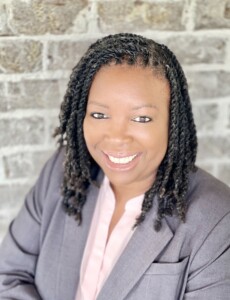
Dr. Elder chatted with ASCO’s Director of Communications, Kimberly O’Sullivan to talk about her becoming the Editor of ASCO’s Online Journal, Optometric Education (OE).
ASCO: Dr. Elder, congratulations on becoming the Editor of our Journal, Optometric Education. Before we talk about the Journal, people may not know that you are the new(ish) Dean of UMSL, and more importantly you are the first Black/African American woman to be appointed Dean of an ASCO institution. Congratulations and what an historic achievement.
Dr. Elder: Thank you! Thank you! Thank you! Whenever someone makes the comment that I’m the first Black/African American female Dean of an optometry institution, it catches me by surprise. Surprised because it has taken until 2022 for this milestone to be met. Of course, I am grateful to be in this place and able to continue my journey in optometric education. As I have said before, I may be the first, but I will not be the last.
ASCO: Congratulations again on becoming Dean. Can you explain your journey to becoming the editor of OE? What interested you in the Journal?
KE: I think this journey has been a long time coming. I served on the Editorial Review Board for years when then-editor Dr. Aurora Denial sent out a call for associate editor. I was very interested in this opportunity and reached out to her. I come from a family of educators. My mom and dad were elementary school teachers. My undergraduate degree is in education. I taught high school math for a semester before I started optometry school. I consider myself a clinician-educator. The Journal is peer reviewed. It, is the only Journal solely focused on optometric education and is very much aligned with my interests. I was thrilled to become an associate editor and I learned so much that becoming the editor has been less daunting. I couldn’t be more grateful for the opportunity.
ASCO: You mentioned that OE is the only Journal dedicated to optometric education or academia. What do you think people should know about academic optometry that they may not know?
KE: The first thing that comes to mind is that most optometry professors are not trained teachers. We are mainly clinicians and subject matter experts. Just because you are a great clinician does not necessarily mean you are a great teacher. Most of us must work at it. People should understand that when you are in the optometric education space you need to maintain clinical skills, but you also need to devote time to becoming a better educator. The pedagogy of teaching is very important and Optometric Education addresses that.
ASCO: What is the process of getting an article published in OE?
KE: Optometric Education is an open access, peer reviewed journal that is available online free of charge. I recommend people review the Publication Guidelines online if they are interested in submitting an article. Prior to an article being processed, two or more people on the Editorial Review Board, who are subject matter experts on the manuscript topic, will review the submission. Two copies should be submitted, one blind and one unblind. The blind copy omits the name of the author(s), their institution(s), and any information that could reveal identifying features. Reviews usually occurs about a month after submission and, if accepted, the paper will be published within the next 12 months.
ASCO: What would you say to someone who is interested in becoming a peer-reviewer and/or submitting an article for consideration?
KE: For people who are considering submitting – I say do it. Take a look at OE online at https://journal.opted.org to see the types of articles that are published. We publish Teaching Case Reports, Educator’s Podiums, special themed issues like the one we’re working on now regarding global optometric education, and of course peer-reviewed articles. I would also suggest potential submitters look at your peers at other institutions to see what they are researching and don’t be afraid to ask questions.
For those interested in becoming a peer reviewer – I would recommend they publish a peer-reviewed paper first. I have found that a good peer reviewer is typically also a good researcher. Feel free to reach out to the Journal staff as we periodically update our Editorial Review Board. Of course, also talk to the Dean/President at your institution and ask for any insight and suggestions they may have.
ASCO: Tell me more about you and your journey to optometry. I remember you saying once that you “found your people” in optometry. I love that. Can you expand on that a bit?
KE: I find that Doctors of Optometry are a dichotomy. Many of us are personally introverted but we talk to people all the time. I know many of us were drawn to optometry because we are caregivers who are very comfortable in one-on-one settings but may be less comfortable in larger settings. We are intellectuals who care for the greater good. When I reflect on myself, my personality, and other Doctors of Optometry, I see how we do a lot of great things to help patients quickly and I see how we are directly and profoundly impacting the lives of people.
I truly do believe I have found my people.
ASCO: Thank you. As we wrap up this interview, we must say a huge thank you to, Dr. Aurora Denial who was the editor of OE for 14 years! Her accomplishments and dedication to the Journal cannot be overstated.
KE: I concur and absolutely agree. Dr. Denial has been an outstanding editor, leader and support system to me as we were navigating the outgoing and onboarding. When I think of Dr. Aurora Denial and all that she has done for optometric education and for me personally, I don’t have the correct words to fully describe all the gratitude I haver.
ASCO: Thank you Dr. Elder. We look forward to seeing the future editions of OE.
written by Maddie Arbaugh, former ASCO intern
In June of 2017, ASCO produced a video while onsite at Optometry’s Meeting in Washington, D.C. entitled, “Why I Chose the Profession of Optometry”. It shows former students talking about why they chose optometry as their profession. We thought it would be a good time to revisit everyone and see where they are now. First was Dr. Christopher Lopez.
Now we catch up with Dr. A. Philip Aitsebaomo.
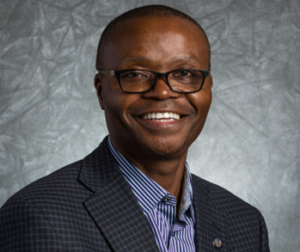
A. Philip Aitsebaomo, OD, PhD graduated from optometry school at Indiana University in 1981. He currently owns a private optometric practice in Houston, which he has had for the last 30 years. He also teaches at Rosenberg School of Optometry in San Antonio, specializing in the areas of Binocular Vision, Contact Lenses, and Practice Management.
Although he now loves the practice of optometry, this has not always been his first choice of a profession. He explored other options, such as architecture and dentistry. However, he decided that the lifestyle optometry could provide was the best fit for him personally, and still feels this way today.
He enjoys that his current position as an optometry professor gives him the ability to interact with students. He feels that they teach him a lot as well. He also loves to see their progress throughout school and after graduation, and what they have done in the field of optometry.
He advises aspiring OD’s to consider other professions before making their selection. He loves optometry but recognizes that it is not the best fit for everyone, so it is important to evaluate other options. However, he wants them to know that optometry will provide a good work-life balance. If students do select optometry, they should visit with OD’s in different types of practices in order to get a good idea of their future, since the profession is evolving.
Part 3 featuring Dr. Erick Henderson here.