
Section 2: Communication Skills of the Student
Part 2. Communication Skills of the Student
Students should hopefully have learned basic communication skills before entering optometry school, but may benefit from coaching in the following areas:
- Active Listening
- While delivery of the message is important, they should be able to listen and interact in two-way dialogue, understanding there may be varying perspectives.
- Awareness of communication styles
- Some may be active communicators, while others may be passive or a blend of both. The knowledge that there are different styles of communication allows someone to have a positive relationship with another person.
- Persuasion
- The ability to influence others’ opinions and behaviors is important, especially when a student is presenting a case and giving information to contribute to the preceptor’s decisions on next steps. This may look like using more clinically-appropriate language, choosing a time to speak when the preceptor is not still busy typing or on the phone, framing the case presentation in such a way that extraneous information is not included.
- Professional Email Communication
- The ability to write an email in a professional manner is important for a doctor’s interpersonal communication.
- Dr. Eilene Kinzer and Dr. Rachel Fitzgerald have provided an informative lecture addressing this situation. lecture notes available here.
- The ability to write an email in a professional manner is important for a doctor’s interpersonal communication.
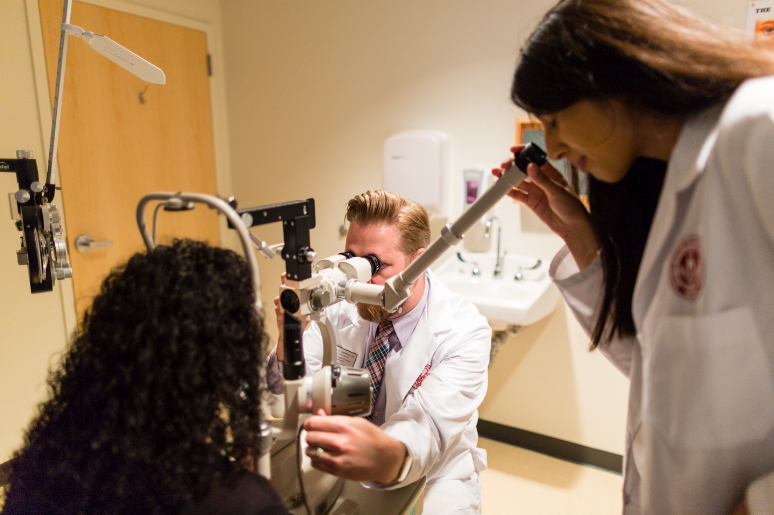
Image courtesy of: New England College of Optometry
Additional Resources
Four tips to enhance patient communication with medical students
https://www.ama-assn.org/residents-students/medical-school-life/4-tips-enhance-patient-communication-medical-student
Corporate communication skills
https://www.northeastern.edu/graduate/blog/corporate-communication-skills/