

Section 2: Setting Expectations
Part 4. Setting Expectations
Expectations of Time
- Start and end time should be written and clear
- Examples: Students should arrive at least 15 min before the first patient, we leave as a team when all patients are complete and paperwork has been finished.
Know the Curriculum
- Be aware of how the curriculum and laboratory learning aligns with the level of their clinical skills/knowledge expected in the program
- Meditrek evaluation criteria
- Lab schedule
- Practice time opportunities
- Differences in curriculum sequence or skills taught between class years
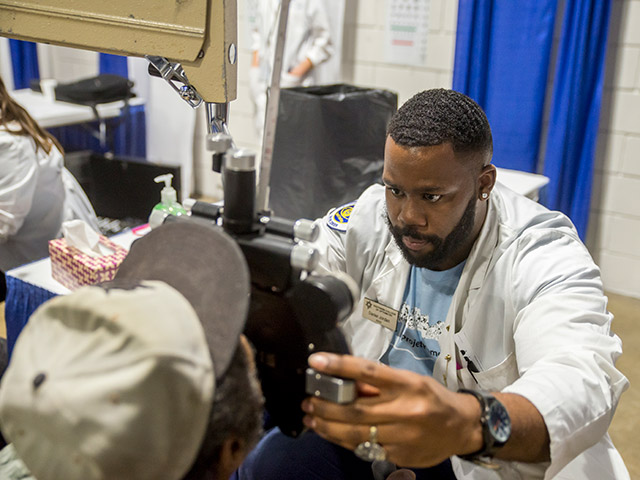
Image courtesy of: Southern College of Optometry
Medicare Guidelines for Working with Student Interns
- Ensure familiarity with institution’s policies for documentation with students
- Review basic compliance guidelines such as required elements of an exam, complete charting, etc
Student Charting and Preceptor Charting
- It can be stressful for a preceptor to have to finish charts all of a sudden at the end of the day. An efficient preceptor lets students know at orientation about their expectations for charting.
- A 2nd and 3rd year student may need coaching about charting workflows, such as not documenting normals until the end of the visit or during downtime, or how to take notes during case history.
- A preceptor should also track which patients have arrived, so that they can ensure which charts they should be looking for from students.
- Variability between EHR systems can cause confusion for students. Give them time to get used to a new EHR system, but also let them know that you still hold them accountable for accuracy and completion such that you are able to also finish your part of the note.
Preceptor Pearl: Use auto-text and templates in the EHR to your advantage. If you are able to type in the note while the intern is occupied with another patient, start filling in portions of the note while you are able, so that completion is much quicker at the end of the day.
Preceptor Pearl: It is not necessary to go over every single chart with a student. Note trends while reviewing charts, and give prompt feedback on an individual basis. If several students are showing the same trends, a small group can be brought together to give the “whys” of why these charting elements are important. Students can sometimes assume that a preceptor is just being picky about documentation, so it is important to explain why you feel the change to the documentation is important.
Holding Space
Preceptors do not know the students’ mental space/background when they arrive to the clinic. Entering the teaching space with an open mind, compassion, and self-awareness is important for a preceptor to be fully effective.
Article: Holding space and engaging with difference: Navigating the personal theories we carry into our pedagogical partnership practices.
Faculty Roles and Responsibilities
Do’s:
- Provide guidance and mentorship
- Allow for a supportive learning environment
- Be a role model
- Give timely constructive feedback, verbal and written
- Have a “filter”
- Be an active patient care provider
- Give difficult feedback privately to students
- Provide activities when there is downtime in clinic
- Make sure your written feedback matches verbal feedback
Don’ts:
- Show too much emotion in a negative manner – be matter of fact
- Just document issues – be sure to communicate verbally as well
- Be “passive/aggressive”
- Criticize students in front of patients – no public shaming
Keep the mantra in mind – in the eyes of the student, how would you best receive feedback for improvement?
Preceptor Pearl: Keep in mind that everyone processes feedback and communicates differently depending on the situation. Try different approaches if your natural style doesn’t seem to be the most effective with that student. Teachers that can adapt to different styles tend to be more effective all around. Get feedback from other preceptors when they observe you giving feedback.
Documenting Progress (or lack thereof)
- Students do not like being surprised by a poor midterm evaluation. Some schools may have grading on a daily basis, a per-patient basis, or a midterm/final basis. For those with less formal feedback, preceptors should aim to have 1-2 informal check-ins with each student to see how they think they are progressing, and provide feedback from the preceptor’s point of view.
- Examples of verbal progress feedback after the student has relayed how they think they are performing:
- “I really liked how you knew your refraction was taking a long time and came to check in with me. That puts the patient first, and I can see you understand that. I’ll help you speed things along and then we can discuss strategies for avoiding the time sink next time.”
- “I think your history skills are strong, but after that, you become a little less efficient. Can we talk about that and come up with a plan together?”
- “I’ve noticed that you’re struggling with completing your charts efficiently. Can you tell me what you think slows you down and we can troubleshoot together?”
- “This was a complex patient, and you really pinned down the assessment and plan. The only thing I would edit is…”
- Examples of verbal progress feedback after the student has relayed how they think they are performing:
How to be a Good Mentor
- Preceptor Variability: Students have a hard time with differences across preceptors. Be up front about how to navigate these differences in a site with multiple preceptors.
- Students want to perform well and may often worry more about the grade and getting to the preceptor’s preferences than understanding the “why” behind the method.
- Encouraging students to determine gaps in knowledge and probing the “why” will often initiate student growth for continual learning.
- Providing resources for students or asking them to find them will also help them learn how to obtain information when they no longer are in the student setting.