

Clinical Preceptor Training Toolkit
ASCO Clinical Affairs Committee, Clinical Preceptor Training Resources Subcommittee Members: Dr. Alicia Feis (Chair), Dr. Amy Moy, Dr. Maria Armandi, Dr. John Nishimoto, Dr. Valerie Kattouf, Dr. Katie Green, Dr. William Hefner
This section will also have Dr. Feis’s video welcome message
The Fundamentals
These principles are essentially universal to all optometry institutions in terms of expectations of students and preceptors in the clinical setting.
Precepting students in a clinical environment is a mutually beneficial learning environment for the doctor, the student doctor and the patient. To ensure that everyone gets the most out of the time together, the learner must feel comfortable to make mistakes, ask questions and push themselves to become more independent clinicians. The doctor must nurture an environment for growth, encourage independence and critical thinking. Hopefully this is achieved with minimal effort with all student interns and clinical preceptors but in the event more effort is needed, please use this toolkit as a resource to enhance the clinical experience for all members of the learning team.
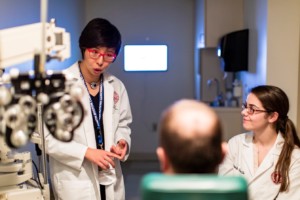
Image courtesy of: New England College of Optometry
Basic Principles for a Preceptor:
- Teach by example.
- Create a supportive learning environment.
- Create a safe environment for students.
- Encourage students to ask questions.
- Give informative balanced feedback.
- Heighten student’s understanding and practice of cultural and linguistic competency.
- Demonstrate the development of physician-patient relationship and communication.
- Follow through.
- Model “Patients First” mentality.
- Be on time for your patient care sessions.
- Move the patient flow along to ensure good time management for patients and students.
Preceptor Expectations:
- Review clinical policies and practice specifics early on.
- What to do when an emergency arises, whom do they contact? What is the protocol?
- What if they have something that requires immediate attention, what is the protocol?
- If they have a question or concern when not in the office, what is the preferred method of contact and all the players involved in that communication tree?
→ Preceptor Pearl: Students take in only a part of what they learn in orientation, just because there is a lot to take in. Have important points in written form so that they can refer to these elements later.
- Establish and review learning objectives with each student early on. Make sure that everyone is on the same page and helps one another to feel like you are working towards the same goal. For example if you are concerned with efficiency and they are concerned with accuracy, those two items may not be mutually exclusive in the beginning of clinical learning.
- What are you hoping they learn over the course of the clinical rotation
- What are they hoping to learn over the course of the clinical rotation
- Coordinate student’s educational activities (student schedules), patient assignments, patient presentation styles and required components and desired flow when presenting clinical findings.
- Set up your expectations of the student early to help them start to think clinically. Presentation of clinical findings and clinical thinking is a learned skill that takes time to develop.
→ Preceptor Pearl: Some students do best by watching the best practice modeled for them. Others need to see the general flow in writing. Try to meet them in the way that is most effective for them, as presenting cases to a new preceptor can be nerve-wracking at first.
- Discuss specific expectations of oneself and of the student learner.
- What if they don’t understand something, or need assistance, what is the preferred approach?
- When should they be prepared for the clinical session? 15 minutes before patient care?
- Do they need to check in before picking up a patient?
- When should a student check in with you?
- Can they dilate a patient without consultation with you?
- What testing is absolutely necessary on each patient?
- How will you provide feedback to the student?
- Lead discussion of clinical cases asking open ended questions.
- Ask thought provoking questions to see where they learner may have a learning gap.
- Provide appropriate guidance to assist the learner and help them arrive at the best final outcome
- Encourage independent decision making and afford clinical externs the opportunity to formulate diagnosis and patient management plans.
- Allow students different ways to respond to questions, i.e., in real time in the exam room, after some time to think on their own or to look up answers. Not all students respond well to direct questions in the exam room or with peers within ear shot.
- Provide feedback that is consistent. Meaning verbal feedback should match written feedback.
- Lack of feedback or feedback that is provided well past the learning opportunity impedes the learning
- Allow the student a chance to remediate mistakes and foster an environment that creates mutual respect.
- No feedback or lack of holding students accountable hinders the students success moving forward as this may create a false sense of ability that does not allow the student to know where to focus their efforts.
- Be sensitive that students are sometimes under immense pressure inside and outside the classroom. If you suspect that a learner is struggling, ask for help from others or let other faculty know so that they can also discuss it with them
- Complete all grading in a timely manner. Discuss areas of strengths and weaknesses to foster an environment of back and forth dialogue.
Student Expectations:
- Students should be familiar with policies, clinical hours and procedures to follow
- Arrive on time, have all equipment necessary and be ready for patient care
- Communicate any and all questions immediately for a quick resolution
- Clarify expectations
- Complete assignments in a timely manner
- Communicate goals for the rotation and areas for increased abilities
- Communicate any misunderstandings early
- Preceptors have the best intentions for your success. If there is another way to better communicate with you, let them know that.
- You are a student who is integrating yourself into a busy practice, understand that you are a part of a healthcare team and all members are expected to be present and deliver high quality patient care at all times
- Any absence from the clinic should be taken very seriously and all individuals must be notified as early as possible especially if patient care is impacted.
- Understand that you will be making mistakes in your learning process. It is your job as a student intern to remediate mistakes as quickly as possible and prevent similar mistakes from happening again
- Ask questions
- Be a self starter
- Defensiveness if a large internal barrier can impede progress
- Clinical requirements for patient care
- Identify, record and analyze pertinent history and problems presented by the patient
- Demonstrate the necessary skills to examine and evaluate the patient to arrive at a rational diagnosis
- Independently formulate a treatment and management plan and understand the implications of various treatment and management options
- Provide preventative care, patient education and counseling to a level of understanding by the patient
- Recognize when it is necessary to obtain a consultation and to coordinate care provided by healthcare providers and/or other professionals
- Demonstrate knowledge of professional, ethical, legal, practice management, and public health issues applicable to the delivery of optometric care
- Effectively communicate orally and in writing with other professionals and patients
- Finish charting promptly and provide feedback to students as appropriate
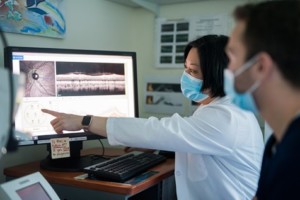
Image courtesy of: New England College of Optometry
Communication
Communication is the key to a successful rotation between preceptor and student. Without effective communication, patient care and the educational experience are not optimized.
Basic Principles:
- Be present and approachable.
- Remember that each student not only has their own learning style, but also a communication style.
- Allow time for students to speak and give more information about their thought process.
- Avoid jumping to conclusions.
- When providing constructive feedback, delivery should be done in such a way that it is clear that the preceptor cares about their success, and concrete steps given towards improvement. Input should be solicited by the student in response to the constructive feedback such that they are jointly helping to shape their improvement plan as needed.
Characteristics of an effective mentor
- Medical student mentoring programs: Medical student mentoring programs: current insights
Emotional preparedness to prepare student for feedback
- Feedback: Cultivating a Positive Culture Feedback: Cultivating a Positive Culture
- Giving Feedback on Clinical Skills Giving Feedback on Clinical Skills: Are We Starving Our Young?
- Teaching Preceptors to Give Feedback
- https://www.stfm.org/publicationsresearch/publications/educationcolumns/2013/february
- MedEd Moments: Improving the Learning Climate on Vimeo
- Student Observations and Feedback
- Self-reflection skills of the student
- BMJ article “The self-critical doctor”: Case studies of students who need assistance with self reflection on their own patient interactions.
- Self-reflection skills of the preceptor–receiving feedback from students and improving your own communication skills
Teaching Students to Communicate
- Helpful Resources
Setting Expectations
- Expectations of Time: start and end time
- Be aware of how the curriculum and laboratory learning aligns with the level of their clinical program
- Meditrek criteria
- Lab schedule
- Practice time opportunities
- Medicare guidelines for working with student interns
- Ensure familiarity with institution’s policies for documentation with students
- Orientation videos from optometry institutions
- SCCO/MBKU Clinical Faculty Orientation highlights – Faculty Roles and Responsibilities
Dos:
- Provide guidance and mentorship
- Allow for a supportive learning environment
- Be a role model
- Give timely constructive feedback, verbal and written
- Have a “filter”
- Be an active patient care provider
- Provide activities when there is downtime in clinic
Don’ts:
- Show too much emotion in negative manner – be matter of fact
- Not just document issues – be sure to communicate verbally as well
- Do not be “passive/aggressive”
- Do not criticize students in front of patients – no public shaming
Keep the mantra in mind – in the eyes of the student how would you best receive feedback for improvement
- Kansas U sample orientation video: Student Expectations for their Rural Preceptorship – 24 minutes
- General Clinical Safety orientation for students (Moy has PPT)
Documenting progress (or lack thereof)
How to be a Good Mentor:
- Qualities of a good preceptor from an audiologist’s perspective. One pearl: Students have a hard time with differences across preceptors. Be up front about how to navigate these differences in a site with multiple preceptors.
Equipping Students for Tough Situations
- Share Dr. McGovern’s Externship materials for Externship SIG
- Practical Framework for Fostering a Positive Learning Environment Bannister S, Hanson H, Maloney C, Dudas R, Pediatrics July 2015, 136 (1) 6-9
Practical Framework for Fostering a Positive Learning Environment
Especially look at Table 1
Inclusive Teaching
- Setting the stage for preceptor-student relationship (understanding culture, bias, etc)
- Inclusive Teaching Strategies in the Classroom, and adaptable to Clinical setting:
- Yale University: https://poorvucenter.yale.edu/InclusiveTeachingStrategies
- Cornell University: https://teaching.cornell.edu/teaching-resources/building-inclusive-classrooms/inclusive-teaching-strategies
- Navigating Difficult Moments (Harvard University): https://bokcenter.harvard.edu/navigating-difficult-moments
- Setting the Stage for Inclusive Teaching: Harvard Center for Teaching and Learning:
- Key Moves | Derek Bok Center, Harvard University
- Manifestations of power and privilege in the learning setting: Classroom Dynamics | Derek Bok Center, Harvard University
- Inclusive Teaching Strategies in the Classroom, and adaptable to Clinical setting:
Cultural Sensitivity/Humility and Implicit Bias
- Five minute video on implicit bias for preceptors: Implicit Bias in Health Professions
- Point to ASCO SIG’s work on this
- Guidelines for cultural humility
- Discussing health disparities and why understanding cultural differences is important:
- Prioritizing health disparities in medical education to improve care:
- Gender diversity and healthcare
- Pronouns
- Categories of gender diversity
- Best Practices for patient care
- Improving cultural competence in healthcare
- OCEF Fall 2021 Video Presentation for Communication with Families of Patients with Disabilities and Families of Non-English Speaking Patients:
- Case Study compilation from Residents
- Guidelines for cultural humility
- NECO Provider training on cultural guidelines for optometrists (link TBD)
- Orientation of the Learner (Maria)
Determining Preceptor’s Style and Learner’s Style
- Learning style quizzes
- Communication style
- Four Basic Communication Styles
- Coaching Style Inventory
- 5 Minute Personality Test
- Comparison of Communications Styles Amongst Students in Allied Health Professions Programs: How Do Our Students Communicate with Other Healthcare Providers? | Buhler | Journal of Research in Interprofessional Practice and Education
- Taking each person’s communication style and understanding how to optimize communication with each other, building mutual respect
- Effective Teaching (John) Many instances of clinical education of students, preceptors are not provided with tools to further develop their skills as effective educators in such settings. The following resources are to help enhance the preceptors to provide a more meaningful experience for both the preceptor and student.
Time-based strategies–include videos of strategies being utilized
The following resources are to enhance the skills of a clinical educator:
- https://www.audiologyonline.com/articles/strategies-for-clinical-teaching-6944 – this is a resource for best practices to be an effective clinical preceptor
- One-Minute Preceptor – similar to the “one minute manager,” the purpose of this is to provide a quick concise skills for students
- Microskills
- Chart Review of Assessment and Plans as time permits – have a set time with the student to ensure the understanding of the management of the patient, and an opportunity for feedback.
- Mini lecture on case presentation techniques for student to preceptor – this is where preceptors can role model for the students the expectations of case presentation. Typically the guideline follows:
- Demographic information (Age, ethnicity, gender)
- Reason for visit
- Significant Review of systems, eye and medical history
- Relevant data relative to the case history.
- Diagnosis, treatment and management, including follow up
Resources/activities for Students in between Patient Care
- Optometry Olympics (Moy)

- Small Groups Activities Examples – these discussions are to supplement the direct patient care experience. The time frame can be 15 minutes to one hour, depending on the time allotted.
- Journal Grand Rounds
- Resources for assessing effective sources
- Optometric Case Bank Discussions for improving case presentation and writing management plans (Moy) https://journal.opted.org/article/optometric-case-vignettes-for-the-clinical-preceptor/
- Journal Grand Rounds
- Use of technology for learning and communication
- Zoom to observe student patient care
- Make video available to student for review and self-assessment
- Making videos to help with procedural skills
- Making videos for role modeling a patient exam
- Making videos of student doing exam skills (with fellow student) and getting feedback from preceptor
- Establish method for peer to peer feedback
- Zoom to observe student patient care
- Ocular Disease cases to use for discussions- example resources
- Kanski cases
- Online cases
- Cases that preceptors may have
- Known educational strategies references
- Transition to direct patient care
- Clinical preceptor works with student in exam room for first patient encounter helping them navigate process, EHR, institutional procedures
- Formative
- Role Modeling
- Reduces student anxiety
- Familiarizes faculty w/ student
- Possible identification of strong/weak students
- Self-evaluation
- Clinical preceptor works with student in exam room for first patient encounter helping them navigate process, EHR, institutional procedures
- Required technical skill/patient encounter types
- “Skill of the month” to be signed off by preceptor
- i.e., tonometry-different methods, gonioscopy, 3-mirror retinal eval, scleral depression, punctal plugs, foreign body removal, double lid eversion, contact lens fit, etc.
- “Skill of the month” to be signed off by preceptor
- Independent study – during gap time between patients, students can do the following:
- Required journal article reviews, then provide synopsis
- Online case reviews with embedded quizzes
- Down-time activities between patient care
- List of activities for clinicians: (John Nishimoto)
- Perform exams on each other – with specific procedures in mind. Examples
- Ocular Disease
- OCT
- FAF
- Scleral Depression
- Gonioscopy
- Threshold VFs
- Topics to discuss in patient SOAP format
- A/B Scan
- List of activities for clinicians: (John Nishimoto)
-
- Contact Lenses
- Fitting specialty fits (Sclerals, Multifocals)
- Corneal Topography
- Topics to discuss in patient SOAP format
- Contact Lenses
-
- Binocular Vision
- Binocular Vision Evaluation (visual efficiency evaluation)
- Perceptual evaluation
- Topics to discuss in SOAP format
- Binocular Vision
-
- Low Vision
- Practice vision simulation evaluations and use of magnifiers
- Bioptic workshop
- Review of drivers license form completion
- Topics to discuss in SOAP format
- Watch visually-impared influencers on TikTok
- Low Vision
-
- Pediatrics
- Special needs exams
- Primary Care
- RX recheck scenarios in SOAP format
- Difficult patient scenarios
Role-playing
- Pediatrics
Active Observation of Student Performance
- pros/cons – interfering with the examination versus being “silent/objective observer”
- Technical skill assessment
- Faculty in exam room vs watching via video – have a rubric based on stated learning objectives
- Observing Student anxiety – does the anxiety impact clinical performance
- Is it accurate as student behavior may differ?
- Does the anxiety interfere with cognitive processing as student focused on task completion?
- Faculty need to understand and acknowledge this
- Example: on the spot answers or allowing students time to digest the question before answering
- Assessment of knowledge base affected and may not be true representation of student
- If anxiety interferes with performance, may need to determine if additional professional support is warranted
- Faculty need to understand and acknowledge this
- Does the anxiety interfere with cognitive processing as student focused on task completion?
- Active observation with real patient vs peer
- Providing feedback in presence of a patient – should not have a negative tone as this impact student/patient trust and satisfaction
- Technical skill assessment
-
Assessment in the Clinical Setting (Valerie)
Providing Verbal Feedback in the Clinic
- Timing is crucial. Verbal feedback and body language should also match written feedback. Self assessment may help with determining a starting point for feedback discussions.
- Framing negative feedback with effective tone and language
- Understanding grading rubric
- Real-time feedback vs didactic feedback (esp in 2nd year)
- Should proficiency feedback be preparation for this? (Ex. preceptor says “I expect you to be making mistakes)
- Are students ready to receive real-time feedback, and do they need preparation/priming to receive feedback in the clinical world (i.e., setting expectations)?
- Giving Feedback in Clinical Setting (John Nishimoto)
- 7 Tips for Providing Feedback in a Clinical Learning Environment
- Twelve tips for giving feedback effectively in the clinical environment
- Receiving Feedback in Clinical Setting
- How to give and receive feedback effectively
- https://www.tandfonline.com/doi/full/10.3109/0142159X.2014.886009
- Assessing via video (synchronous or asynchronous)
Written feedback
- Not passing the buck–the importance of accurate assessment
- How to give a remedial
- Amy Moy has a lecture on this
- “The bar is moving”–expectations change from semester to semester
- Remedial students don’t often understand expectations in clinic
- Are there unwritten rules?
- Do international students need even more prep for those “unwritten rules” and knowledge of the healthcare system?
Accountability–holding the student accountable
- When Nothing Else Works…(Maria)
Mental Health Considerations
- Mental Health tools for the Preceptor (Dr. Armandi)
-
https://docs.google.com/document/d/1yVsLv8N1NZz05MYJ6LB8-Zx7cfLxaLq_z8BDWdwwEhg/edit
- Body language
- Sensitivity for different scenarios
- Common responses for different scenarios
- Make a short video for each scenario for easy access per situation
-
- Mental Health First AID is a great training course that helps raise awareness of MH issues for everyone, clinical or non-clinical and supports all in understanding ways to be helpful. https://www.mentalhealthfirstaid.org/
- Clinical Student Cases (and resources to follow) *TBD
- Cultural competency case with a student
- Mental health case with a student
- Personal problems case with student
- Poor preparedness/responsiveness by student
- Personality differences: Loud and passionate preceptor with a timid student
Institutional Resources and Guidelines
-Best Practices for consistency among preceptors
-starting and ending clinical sessions
-chart review sessions
-journal club research methods
-sitting up vs lying down BIO
-choice of special testing for special clinical situations
-time to dilation at various levels
-basic chart documentation requirements
-presence of preceptor during patient care
-existence of orientation to clinical rotation
-basic requirements for students to fulfill before clinical privileges granted
-Communication workshops (AZCOPT’s workshop, Alan Alda Center for Communication)
Resources:
UKansas HRSA resource: https://www.kumc.edu/school-of-medicine/office-of-rural-medical-education/preceptors/preceptor-resources.html
Amy’s note: I just wanted to point out the IPE toolkit led by Linda Casser and John Nishimoto–this is a really cool format. I don’t think it’s necessarily the right format for our committee, but it shows that ASCO has a readily accessible site for the toolkit. ASCO IPECP Toolkit for Optometric Education
UNMC webpage
Clinical Teaching Strategies | Academy | University of Nebraska Medical Center
Uof A
Tools for Teaching | Department of Medicine
Emory Preceptor Expectations