Dr. Damari, congratulations on being named ASCO President for fiscal year 2017-2018. What are you excited for most? Do you think you will face any challenges in the coming year?
It’s a difficult time in all healthcare professional education right now. There are fewer students graduating from high school, which means fewer graduating from
college, and thus less students applying to healthcare professional schools overall. We have the challenge of getting the best and the brightest college students to recognize what a terrific profession optometry is – a profession that helps people improve their quality of life. In my opinion, there is no other healthcare profession that does more to improve people’s lives than optometry.
Optometry is a fun and exciting field that truly impacts lives. I believe we face the challenge of doing a better job to communicate this to potential students around the country. Some of the publications that ASCO has produced really do that well. The “True Stories” brochure eloquently captures how much our profession can do for patients. Those communications go a long way about informing people about our profession. We can and must keep doing more to attract the best and the brightest.
ASCO: What will be some of your top priorities this year?
DD: Dr. Zadnik got us started on the strategic planning process so my top priority is to finalize our Comprehensive Strategic Plan and to start its implementation. Specifically, the number one priority is to build our applicant pool. I want to increase our effectiveness in various operations, to give our staff better resources, and to better communicate with our volunteers. We need to continue to take advantage of our great, new Executive Director, Dawn Mancuso. We’re excited for the direction ASCO is going in.
ASCO: What are your ideas to help the ASCO staff further the Strategic Plan?
DD: I hope to visit the ASCO office when we’re in D.C. this year and meet with the staff. I had been there when I became Dean four years ago and I look forward to seeing everyone. In my past work with the staff, I have found them to be great to work with and passionate about the profession. I want to make sure that we can capture that passion and give them what they need in terms of volunteers and resources to carry out the Strategic Plan.
ASCO: What drew you to optometry? What did you find most appealing about the field of optometry?
DD: I initially thought I would go into law. During my gap year between college and graduate school, I was talking to my Doctor of Optometry about going to law school and he said he didn’t picture me as a lawyer. He told me he thought I would be a great optometrist. He convinced me to spend a day at his office, where I saw many different aspects of optometry, including vision therapy, which I found eye-opening. He turned my whole perspective around and I went to optometry school for the next 4 years.
Two things have really continued my passion for optometry. The first is the patients I have seen over the years. One of the greatest things about optometry is that you impact people for the rest of their lives. I had a private practice in the mid-90’s in Rochester and had many patients. Twenty years after selling that practice, I am still receiving letters and calls from, and running into at professional conferences, former patients who thank me for turning their lives around.
The second thing that has continued my passion for optometry is that I had tremendous mentors in my career. Even before I was in school, my optometrist changed my life path. Those mentors really inspired me and moved me forward.
ASCO: What drew you to teaching? How did you become so passionate about optometric education?
DD: When I was in private practice, I loved the patients and the impact we were having on their lives, but what I hadn’t expected was the teaching bug had really bit me when I was a clinical assistant professor at SUNY. As a Doctor of Optometry you impact a lot of lives, but as an optometric educator, you impact all the lives of the students’ patients as well. It really is an exponential impact. I’m very passionate enlarging the future of our profession and what we can do for patients. I felt the most effective way to do that was to get into optometric education.
It was a privilege to work with Dr. Billy Cochran, who was president of Southern College of Optometry at the time, who made a big impact in what I saw in optometric education and who taught me strong leadership qualities. Working with people like him and others in optometric education has really shown me this is a great way to serve the profession as well as to enrich and enlarge the profession. This ASCO presidency term is just another step in my attempt to serve this profession that I love so much.
ASCO: If you were speaking with a student who is interested in becoming a Doctor of Optometry or with a student who has the aptitude but may not know about optometry, what advice would you give them?
DD: I would ask them, “How do you picture yourself living the rest of your life and in your career? Do you want to serve others and influence their ability to live better lives?” I think that optometry is a great way to do that, which is not readily apparent – making it even more important. We need our visual systems to serve us comfortably and tirelessly throughout the day, and there is no other profession that can address that need. I would say to a student that becoming an optometrist gives you the opportunity to impact the success of others throughout their whole life.
ASCO: On a more personal note, tell us a little about your life outside of the workplace. What was the last vacation you took? What are some of your hobbies?
DD: My son studied for a semester in Florence. He was studying architecture – couldn’t convince him to do optometry! He does make an impact on vision though, as architecture affects the buildings and infrastructure we look at every day. We visited him in Florence and then also went to London and Paris. That was a great trip. Our daughter had also spent a semester abroad in London so when we went to London on this trip, she showed us around that big city. I love traveling because I always try to keep my mind open to what other people experience. I find that it enriches my mind to know what other people’s experiences are like.
As for hobbies, I do a lot of reading and too much binge watching of Netflix and Hulu. I’m very excited for the new season of Kimmy Schmidt to come out. What I miss about my time in New York was I saw a lot of plays and watched a lot of baseball games. I don’t do a lot of that anymore, but I used to love doing that.
ASCO: You have served as the Dean of the Michigan College of Optometry at Ferris State University since 2013. Tell us a little about your school and your experience being a proud Bulldog. What have been some of your favorite things about living in Michigan?
DD: I never saw myself as a Dean but someone who knew my passion for the profession convinced me to apply for the job at Ferris State University. I interviewed and I loved it. The people up here are wonderful. One of the best things about being a Bulldog is that the people at Ferris State University are passionate about the students. The population is incredibly diverse. A lot of students are first generation college students. I was the first in my family to attend college, so for me, I feel a real personal connection there.
Michigan is similar to where I grew up in upstate New York so it was like coming home when I came to this job. After 16 years in Memphis, which is very different than New York, it really felt like coming home. It’s great to have four seasons again. After you make it through the cold winter, you are rewarded with the beautiful spring, summer, and fall. Big Rapids is a cute, small town and because it’s a college town there are many activities to do. It’s just been a really great move for us.
ASCO: And lastly, our intern, Amanda, is graduating this May and plans to pursue a career in public health in the future. Amanda asks, what common behaviors do you believe are strongly affecting the vision of the public? What advice do you have for someone who is passionate about improving vision at the broader level of public health?
DD: Vision is one of those aspects of daily life that people do not recognize impacts them. I hear people all the time say, “I have trouble looking at a map for directions,” and “I fall asleep when I read.” All of those are symptoms of different visual problems. I think that’s a big public health need – to educate the public on why their vision is so important. Itching eyes, fatigue, and headaches are all often caused by visual problems. We also have a public health crisis in this country with diabetes. Everyday Doctors of Optometry are making the first diagnosis of diabetes through the detection of the ocular signs of diabetes.
I think the biggest impact on public health our profession could make is to convince more people to come into an optometrist’s office for a comprehensive eye exam. I can’t tell you how many people have never had an eye exam because they believe they can see 20/20. At the same time, though, a lot of those people hate reading and always skip around on pages and they often feel really fatigued when working on the computer. It’s a shame that 20/20 is assumed to be perfect vision when 20/20 vision is only one aspect of visual health.
People struggle with settling with their vision every day because they don’t realize they’re struggling. Many people are losing their vision to diabetes and glaucoma. This is a real public health problem and optometrists must work with public health officials and other healthcare practitioners to improve everyone’s visual welfare.
Thank you for your time Dr. Damari! We wish you the best of luck as president!



 Pre-Optometry Clubs are an excellent way for prospective optometry students to learn more about the optometry field and develop their interests. Pre-Optometry clubs can help undergraduate students in their application processes as well as help them gain mentors who share their same passions. Often, Pre-Optometry clubs can provide opportunities for students to make lasting impacts on their campus, in their local communities, or in communities around the globe. Senior Jackie Nguyen of University of California San Diego (UCSD) and sophomore Bibi Barase of San Diego State University (SDSU) shared with ASCO how their clubs are making a difference in their communities.
 When club members are not advancing themselves professionally or attending club social events, such as bowling or hiking, they are volunteering their time in the community. They volunteer at local vision screenings, and they partner with local service clubs like Lion’s Club or Rotaract. UCSD Insight Pre-Optometry Club has a Volunteer Coordinator who helps plan volunteer events. They also volunteer at Vision Walk as well as at a blind community center called Braille Institute San Diego. They have also fundraised money for Braille Institute San Diego by hosting profit-shares with California Pizza Kitchen. The club visits Tecate, Mexico a few times a year to help a clinic with vision screenings and triaging.
 Bibi Barase is a sophomore majoring in biology and minoring in psychology at SDSU. She will be graduating early next spring and will be taking a gap year after she graduates to study for the OAT and gain experience in optometry. Bibi is the secretary of Focus, SDSU’s Pre-Optometry club, and she will be the co-president next year. Bibi’s club has bi-weekly meetings that guide students in the right direction towards optometry school by going over OAT questions, hosting optometrists as speakers, and discussing next steps and plans for students. Bibi’s club also visits Western University College of Optometry to attend their open house and explore the campus.
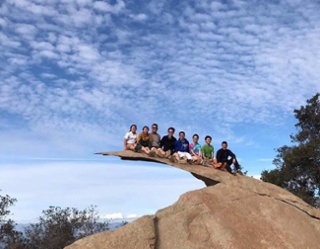 Bibi believes that Focus has influenced her pathway to optometry school. Bibi says, “Just being a part of Focus has helped me receive so much important information. It’s nice to have others encouraging you along the way, in addition to visiting schools, listening to speakers, and other things.” Bibi, just like Jackie, has really enjoyed her experiences in her Pre-Optometry Club, not only learning more about the field of optometry but also helping improve and influence eye care in her community.
 Each July, ASCO swears in a new President to serve for the year. This year’s President, Dr. David Damari, sat down with ASCO’s Intern, Amanda Howarth, and Director of Communications, Kimberly O’Sullivan to talk about the next twelve months.
 Four months ago I joined the Association of Schools and Colleges of Optometry as an intern, and I could not be happier with my decision. In my short time here, I cannot believe how many new skills I’ve gained and how much I’ve learned about the field of optometry. Knowing virtually nothing about optometry before I started working here, I am leaving with a greater knowledge and appreciation of just how important the work of an optometrist is. I was surprised to learn how many daily activities and habits can influence eye health and that so many of us, including myself, are unaware of common, eye-damaging behaviors. Even though I am not planning on becoming a medical professional, I feel optometry is an exciting field to enter, with the opportunity to truly make impactful changes on patients’ lives.
 The opportunity to use both his science degree and his business degree attracted Dr. Jack Schaeffer to a career in optometry. “Optometry allows me to be a doctor, which I love, but also allows me to be a business person and utilize those skills as well,” he says. Furthermore, “Optometrists are doctors who are also able to have personal lives. There’s very little on-call, and most of the work is done during the day. Yet you’re able to serve your patients and serve humanity by helping people to see their best throughout their entire lifetimes.”
 Just ask Kendra Weiler, a third-year student at Pacific University College of Optometry (PUCO), who says, “There’s certainly a lot of time that you need to spend on studies and practicing procedures, but all that mental work deserves a break!” While concurrently pursuing her Doctor of Optometry degree and a master’s degree in vision science, Kendra is president of PUCO’s Student Optometric Association and a member of several on-campus clubs, including the Sports Vision Club and Student Volunteer Optometric Services to Humanity (SVOSH). She spends time off campus with friends as well.
  “The college is in a small town, so it may seem that we’d be isolated, but we’ve never had a hard time finding things to do,” she says. “We take short trips into Portland to explore the city, go on local hikes or running trails, visit wineries or breweries, or just enjoy each other’s company at someone’s house. The great thing about optometry school is you can really personalize your experience.”
 Indeed, in their free time, optometry school students can take advantage of a variety of official clubs available to them and the opportunities to socialize and travel that they provide. They can also make time to do whatever it is they like to do to “recharge batteries.” Jeremy Outinen, a third-year student at Nova Southeastern University College of Optometry (NSU), is president of the Student Government Association and a member of several clubs including the Private Practice Club. “I really enjoy being involved in the organizations we have at NSU. They all have events and meetings that are enjoyable.” Beyond events and meetings and trips, Jeremy says you may find him and his friends simply “vegging out watching TV or hanging out over dinner or at a bar.” The same goes for Evelyn Dearing. She’s a fourth-year student at Salus University Pennsylvania College of Optometry (Salus/PCO) who’s a member of the National Optometric Student Association (NOSA) and also enjoys playing on an intramural basketball team, bargain shopping, crocheting and watching movies. According to Evelyn, optometry students tend to “work hard and play hard, and the great part is you’re not alone. All of your classmates are striving scholastically while creating friendships that will last a lifetime.”
 That’s one aspect of optometry school social life that many students may find is different than it was in undergrad, Kendra says. “Your classmates are also your closest friends. You end up becoming each other’s support systems and best friends. Plus, you always know what other people’s schedules are like, so finding time to do things outside of class is easier!” Jeremy agrees, saying “I feel like my social and professional lives are mixing more and more because my classmates are so tied into my life now.”
 Balance is key, students say. As Jeremy explains, “You have a lot more on your plate compared to undergrad, so you have to make time for a social life. That said, it’s that much more important to have one. You always need that time to unwind and have some sort of outlet besides your studies. And you savor it more.” Making time to unwind is all about time management, Evelyn says. Throughout her years in optometry school, she’s been proactive about her study time, even
 Kendra wholeheartedly believes that “Finding a balance between school and outside activities will make you a better student.” And in her experience, “The amount of time people need to have off from school varies. Some people prefer lots of time to socialize, while others need more time to dedicate to studying. As long as you find a good balance for you, it’s easy to find the right amount of time for both.”
 The successful completion of the first semester of the first year which was much like a mountain morning fog has now been completed. The students adapted well to the concept of block exams which comes from the joint Medical school classes for parts of the curriculum. The students take only one exam every set block of weeks. There is one exam covering all topics covered in the block, timed, computer based and given in a morning and afternoon session. This will help prepare them for the National Board format on a routine basis. The founding class of the Kentucky College of Optometry performed to a degree of excellence in this very new and demanding assessment style. All students advanced to the second semester. Ten scholars were named to the Dean’s list.
 As graduation from optometry school neared, Valerie Lam OD, FAAO, knew she wanted pediatrics and vision therapy to be her career focus, so she wanted to further sharpen her VT skills and add to the experience she gained in her fourth-year rotations. She and a classmate had discussed the possibility of opening their own practice, so she also wanted to be as equipped as possible for patient care and “come out of school thinking more like a doctor and less like a student,” she says. Also on her mind was having the option of teaching at some point in the future. A residency was the way to address all of these goals. The summer after her graduation from Southern California College of Optometry at Marshall B. Ketchum University, Dr. Lam completed the college’s 2012-2013 Pediatric Optometry and Vision Therapy residency.
 Dr. Adeline Bauer, OD, FAAO, FSLS, completed her 2014-2015 Cornea/Contact Lenses residency at Michigan College of Optometry at Ferris State University the summer after she graduated from the college in 2014. She pursued a residency because she wasn’t quite sure exactly where and how she wanted to practice after optometry school. During the residency she rotated through several types of settings, including a private optometry practice, a cornea specialist’s office, a specialty contact lens clinic and a contact lens lab. She was able to acquire broad experience while keeping her options open, and she felt the residency could take her in a number of different directions such as private practice, research or a hospital setting. She also learned something surprising. “What I liked most was the teaching component,” she says. “I never would have known that if I hadn’t done my residency! I do want to teach someday.”
 Alison Jenerou, OD, FCOVD, FAAO, associate professor and director of residencies at Michigan College of Optometry, says “The benefits of doing a residency include working with like-minded people who havethe same level of passion for an area of optometry. This pushes the resident to get out of his or her comfort zone, sharpen critical-thinking skills and become better, all while having the one-to-one mentorship of the residency supervisor and/or other attending doctors.” Dr. Jenerou adds, “The networking and connections made during the residency year open many doors for these individuals. Many become leaders in eye care.” Connections made during a residency may include not only fellow residents and program faculty and mentors, but also practitioners in other health professions and hospitals, and representatives from industry. Involvement in research projects, grand rounds and other seminars, and writing and presenting papers is also common during residency. Furthermore, when looking for their next optometric hire, schools and colleges of optometry, referral/surgery centers, the U.S. Department of Veterans Affairs, many private practices and industry typically search for residency-trained optometrists.
 Reflecting on her residency, Dr. Bauer explains, “It made me a more confident clinician. I gained extensive hands-on experience in patient management not normally emphasized in optometry school, such as
 Getting that full picture is important, says Dr. Bauer, because both the applicant and the program want to be a good fit. “Each residency is different and has a different area of emphasis,” she explains. “Do your research. Some are more clinical, while others deal more with research, for example. The best way to know what that residency is like is to ask the previous residents. What was their favorite and least favorite part? What is the patient base like? Don’t forget to ask about cost of living and lifestyle of the area! That will definitely affect how well you fit the residency.” [You can look up previous residents from all of the programs using the Association of Schools and Colleges of Optometry (ASCO)