

Eye on Optometry Blog SUBSCRIBE TO EMAIL UDATES

Autumn Killop third year optometry student at SCO
writen by former ASCO intern
Theresa Maher
Autumn Killop, is a contributor to the ASCO blog but now is the subject. As a third-year student at the Southern College of Optometry, Killop has the opportunity to engage in clinic practice this year, and reflect on the last two years. She finished her midterms in early June, and has a lot to say about her educational experience as an optometry student.
“Last year I had numerous chances to network, opportunities to attend conferences, and gained experience organizing meetings, fundraisers, and other events.” Killop said, “It was a busy but rewarding year.”
Killop said that her first year classes were heavily focused on laying a groundwork for her second year and beyond. Her classes revolved mainly around anatomy, mathematics, and optometric theory.
The second year courses had more clinical applications, and by the spring semester, Killop was taking mostly eyeball-related classes. Her material narrowed in focus, and she was challenged to think more like a practitioner and dedicate more energy to assessing solutions to potential scenarios in a clinical setting.
“There have been situations where I felt confident in my abilities and others where I either learned from a mistake or something I had never seen before,” Killop said.
In her third year, Autumn gets to participate in what is known as “clinic,” where she applies her learning to actual patients in an office setting. She’s only a few months in, but she is loving the experience. She said she’s been looking forward to clinic the most, and she’s seen many different types of cases already. She’s applied lecture material to real people instead of her classmates, and it’s a whole new learning experience for her that she truly enjoys.
“Everyone always has a smile on their face that brightens your day, and they are a crucial part of the support system that makes this school so incredible,” Killop said of SCO.
Part of Autumn’s enthusiasm for learning and what she does could be attributed to the learning environment at SCO. She says that the student life is amazing, and she has plenty of opportunities to achieve “the best educational experience possible.” There are student organizations for aspiring Doctors of Optometry on campus, state clubs, and more that hold events during the year. From these events, students can usually grab a free breakfast or lunch. She holds the school’s faculty and staff in the highest regard, but her favorite part about SCO is the welcoming and kind environment she sees on campus.
“The clubs on campus reach all types of ethnicities, backgrounds, and cultures that provide opportunities for students.” Killop said.
Memphis, where SCO is located, is also a thriving city to learn in. When students need a study break, Killop says it isn’t hard to find one. There are always events such as fairs, festivals, concerts, trivia, and tournaments.
If Killop isn’t grabbing a meal from the campus events, there are plenty of places to eat in Memphis that she loves, as well.
“I love when family and friends visit me because I find a new restaurant to take them to, in addition to the ones I take everyone to—Brother Juniper’s for breakfast and Central BBQ for lunch or dinner,” Killop said.
After graduation, Autumn has a couple plans. First, she wants to pursue a residency. She’s not sure what type yet, but she’s counting on clinic this year and externships next year to help her narrow it down. She’s thinking a residency in ocular disease would complement her life goals best. Her ultimate goal is to be a volunteer in the U.S. and abroad to help those who need care most. Her first step after her residency, she hopes, will be to participate in the Volunteer Optometric Services to Humanity Corps. The program focuses on creating sustainable eye care in developing nations.
Her advice for prospective students—optometry holds opportunities for people of all motivations. There are career opportunities, as well as volunteer and service opportunities of all kinds for Doctors of Optometry, from practices to Native American Reservations.
The future of optometry also excites Killop. She says that sub-topics in the field and the scope of practice are not only expanding, but thriving. The U.S. just saw a fifth state legalize the scope of practice for Doctors of Optometry to include surgical procedures. With an aging population in the United States, the nation will see an increasing prevalence of diseases like diabetes, glaucoma, and hypertension—all of which can be detected by Doctors of Optometry.
“It is a promising and exciting career that I have been wanting to be a part of since I was nine years old. Fourth grade Autumn would be so proud,” Killop concluded.

guest author Dr. Jeffrey Lewis OD featured in ASCO’s Optometry Gives Me Life campaign futureeyedoc.org
Whether you are 12, 18, 35, or 46, a career in Optometry is a great way to take your life in a new direction. Optometry is rewarding and provides excellent career opportunities for growth. In addition, most Doctors of Optometry have high job satisfaction and excellent quality of life. In terms of income, you won’t fall short either! The American Optometric Association has data showing the average net income is $140,013 for the primary practice of optometry to $172,356 for optometrists who own their practice. Let’s take a deeper dive.
Reasons to be an Optometrist
Career Opportunities
Doctors of Optometry are in high demand. We care for the aging population of Baby Boomers and Gen-Xers. Going forward, the need for this profession is only going to keep growing as the population of aging people increases. In fact, according to the Bureau of Labor Statistics, optometry will grow by about 27 percent, or 11,000 new jobs, from 2014 to 2024. This is higher than the average job growth expected across all industries.
In addition to need, there are other things that a career in optometry has to offer. First, you can participate in interdisciplinary care with other healthcare providers. This allows you to take part in a holistic care regime through the practice of primary optometry. Next, you don’t just have to treat patients.
Various Specialties
If you so choose, you can select the route of research. This will allow for the exploration of new diagnoses, treatments, and cures for eye conditions and diseases. Along the same direction, if you choose, you can also teach the next generation of optometrists while researching or just as a stand-alone career. There are 23 schools and colleges of optometry across the United States and Puerto Rico.
Finally, the opportunities for your specific practice are much more extensive than other types of medical professions. Within optometry, you have the option of pediatric, geriatric, low vision, contact lenses, vision rehabilitation, ocular disease, disabilities, and other special populations. Within each of these groups, you will be most likely guaranteed to find a job in any setting from cities and suburbs to rural areas and even internationally.
Job Satisfaction
Optometrists love their jobs, in general, due to their ability to make the lives of their patients better while maintaining a work-life balance. We can improve lives and see the immediate satisfaction when a patient puts on glasses for the first time. In addition, most optometrists can choose a flexible work schedule based on their needs while receiving minimal emergency care requests.
If you are thinking about a career in optometry, then learn more about what optometrists do and how you can get started with the Association of Schools and Colleges of Optometry. Our doctors will show you what you can expect and how they have improved their lives and the lives of their patients by choosing optometry.
Jeffrey Lewis, O.D.
The Doctor of Optometry degree is a ticket to a rewarding, well-compensated, flexible career, and combining it with another graduate degree, such as a master’s or PhD, opens even more doors of opportunity. Many schools and colleges of optometry offer dual-degree programs. The available programs are structured in various ways. For example, some are campus-based while others are at least partially online, and the degree tracts may be completed concurrently or consecutively. What the programs have in common, however, are the benefits they can provide for students, which include the ability to branch out from solely clinical optometry into research and to receive two degrees in less time and for less money than it would typically take.
The Security of an Optometry Degree, Plus a PhD

Dr. Stephanie Adams
In May 2018, Stephanie Adams, OD, PhD, graduated from the New England College of Optometry (NECO) as the first recipient of its OD/PhD degree, a joint program with Boston University. As an undergrad she enjoyed her molecular biology courses and working in research labs and knew she wanted to pursue a PhD, with some clear goals in mind. “I wanted the security of a health profession-based career,” she says. “I explored the various health professions and was most interested in optometry and the ocular connection to systemic disease. I also wanted to be able to stretch my knowledge outside the realm of vision research and be qualified to join any science department and teach basic science courses at universities, which the PhD would allow me to do.”
After receiving the OD/PhD degree, Dr. Adams completed an ocular disease residency at the West Roxbury VA Medical Center in the Veterans Affairs Boston Healthcare System. Then, in August 2019, she moved directly to her position as an assistant professor at the Illinois College of Optometry where she works in the primary care eye clinic precepting students and also helps facilitate human anatomy lab and lecture content. “Through the NECO OD/PhD program I was able to earn both degrees in a total of 7 years,” she points out. “A PhD degree alone can take anywhere from 4 to 7 years, so this was a great opportunity to follow a set schedule to a dual degree in 7 years, which included publishing three papers based on my work. In addition, with a PhD, I am a more competitive applicant for NIH grants to fund potential research projects.”
Optometry and Public Health

Dr. Kelly Morgese
The dual OD/Master of Public Health degree was one of the things that attracted Kelly Morgese, OD, MPH, to the MCPHS University School of Optometry. She completed the program in spring 2019. “My interest in public health blossomed during my time as an undergraduate working with vulnerable populations in New Mexico and taking medical sociology classes,” she says. “I am passionate about people and health care, and there is so much public health-related work to be done in optometry. It relates to everything from amblyopia prevention through pediatric vision screenings to educating communities about how dilated eye exams save lives by revealing systemic diseases, and the importance of compliant use of contact lenses and glaucoma medications.” Dr. Morgese also feels the knowledge behind her dual degree will help her to relate to patients on a deeper level, with a better understanding of what barriers stand between them and the best possible health outcomes.
After graduating with her OD/MPH degree, Dr. Morgese began a residency in ocular disease/primary eye care at the W.G. Hefner Veterans Affairs Medical Center in Salisbury, N.C. Looking toward the future she says, “I anticipate public health will be part of everything I do in optometry.”
Advantages to Being a Clinician and a Researcher
The Ohio State University College of Optometry (OSU) is among the optometric institutions that offer a dual OD/MS degree. Jeffrey J. Walline, OD, PhD, Associate Dean for Research, describes its appeal: “The OD/MS degree provides students with more options when they graduate. Completing the program gives them research experience that is important to industry partners who need to test their products. The program also makes students better consumers of science so they can practice evidence-based optometry. In addition, they have an advantage when applying for a clinical job because employers know they have obtained expertise in an important area of clinical practice. It opens doors they don’t even know exist.”

Dr. Jay W. Henry
Jay W. Henry, OD, MS, can vouch. He received his Master of Science in Physiological Optics and Doctor of Optometry degrees from OSU in 1998. As he explains, “I pursued the OD/MS dual degree for a number of reasons. I wanted to challenge myself while in optometry school. I also felt like this was an outstanding opportunity to use my time wisely and get multiple degrees without spending many more years in school. I felt like it was a financial savings, time savings and most importantly a great career-building opportunity.”
Dr. Henry’s expectations were exceeded. Upon graduating he was offered a job as a part-time clinical instructor at OSU as well as more than five other positions in the area he wanted to live and work, Columbus, OH. His offers included roles in commercial, optometric private practice and OD/MD referral settings. “I think being one of the few that graduated with the combined OD/MS degree in my class definitely helped spur the interest in me,” he says. And the positive developments didn’t stop there. Dr. Henry, who now works with a full-scope practice near Columbus, notes that “numerous opportunities have been offered and created for me that I contribute to my additional MS degree as well as the connections I made as part of the degree process. Some of these opportunities have been my continued involvement with The Ohio State University College of Optometry as an adjunct faculty member and clinical preceptor at my private practice for the extern program, conducting contact lens studies for numerous companies, being invited to write journal articles on various topics, creating and co-speaking on three national lecture series about government incentives, federal legislation, quality reporting, meaningful use and technology in eye care, and serving on industry advisory boards for technology and electronic health record development.”
The effort he invested in earning the double degree was well worth it, Dr. Henry says. “I can say it has paid me back in dividends and rewarded me with opportunities I never imagined would come my way.”
**********
Visit the websites of ASCO member schools and colleges of optometry to explore the dual-degree options they offer. And let three eye doctors show you more about how you can “find your charge” through a career in optometry.

Dr. Katherine Fisher
written by Theresa Maher
ASCO intern
Sometimes two dream careers don’t seem compatible, like medicine and fashion. Life has a funny way of working out, though. At four years old, Dr. Katherine Fisher was sure she would be a fashion designer. She wanted to be a doctor too, though. She told her mother that she would be an eye doctor.
She was able to fulfill that dream. After graduating from The Ohio State University, College of Optometry in 2018, Fisher has her own practice in Dayton, Ohio.
We know that we wear glasses because we need them to see, but in recent years we’ve seen more trends of glasses being used as fashion accessories, as well. Big-name fashion brands like Gucci, Versace, Prada, Chanel, Coach and more manufacture glasses these days.
At the 2018 Oscars, Lupita Nyong’o wore two-toned cat-eye glasses that made fans on Twitter gush and revive the Twitter account from 2015, @LupitaGlasses. Fans started the account in 2015 after her watching Nyong’o wear Ray-Bans-esque thick, two-toned frames at the Golden Globes that year.
In 2019, Fisher saw an influx of glasses on the red carpet. She said, “I noticed when I watched the Oscars this year that a lot of the celebrities were wearing glasses as an accessory with their designer looks.”
Twitter users noticed, as well, and were glad to see not only the aesthetic looks of the glasses, but representation of people who need glasses and use glasses. User @heloeloila tweeted, “for someone who is wearing glasses their whole life and usually meets people trying to avoid wearing them—seeing actresses coming to stage wearing glasses is super-important #Oscars.”
Fisher has noticed a shift in the attitude towards these common tools that help us see every day, “People used to wear glasses because they needed them to see,” she said, “but now there is a style factor.”
Fisher said that she feels fortunate to work in an office with opticians who help patients find the correct glasses for their face shape, personality, and style. While she still had a few experiences with patients who were hesitant to wear glasses, she maintains that, “We have a frame for just about everybody.”
When Fisher has time between patients, she enjoys helping patients decide on the best frames for the patient.
“I think the patients appreciate another opinion most times,” Fisher said.
Fisher explained that she, as she assumes any health care professional does, loves helping patients and that was why she became a Doctor of Optometry.
“I also love helping people feel comfortable in their own skin,” she said, “and feel better about their appearance.”

Dr. Ida Chung
written by Theresa Maher
ASCO intern
For parents of a new child, the list of concerns is endless—limiting germ exposure, diaper rash, formula versus breastfeeding. As children get older, the list of worries change, but it doesn’t get shorter. Least of these concerns, for many parents, is a child’s optometric health.
Maybe a child’s optometric health should be of more concern. According to the American Optometric Association, or AOA, “an estimated one in five preschool children have vision problems,” and a quarter of U.S. school-aged children wear corrective lenses. Since optometric issues have the potential to worsen over time, early diagnosis and treatment are essential.
“What drew me to pediatric optometry is my ability to effect a life-long change in a child who has undiagnosed vision problems by making the diagnosis and providing treatment,” says Dr. Ida Chung, the associate dean of academic affairs at Western University’s College of Optometry.
What many may not realize is that eye and vision complications can affect the rest of a child’s life and development significantly—including their social interactions, school performance, and self-esteem. If left untreated, the AOA maintains that vision disorders could affect an individual well into adulthood, especially with regards to education and employment.
The AOA also says that by the age of six, a child is susceptible to over four vision-obstructing conditions. From six months to five years, over 20 percent of children could have farsightedness, or hyperopia. Children who have hyperopia have a higher risk of being cross-eyed or lazy-eyed. If left untreated, lazy eye could lead to severe vision loss.
The four most high-prevalence optometric conditions for children six months to six years of age are nearsightedness, farsightedness, astigmatism, and anisometropia. Astigmatism is a condition caused by an irregular shape of the eye or curvature in the lens of the eye. Anisometropia is a condition in which both eyes have a difference in refractive power (meaning one eye could be nearsighted and another could be farsighted).
The three most high-prevalence optometric conditions for children five years to 17 years old are farsightedness, nearsightedness and astigmatism. With visits to a child’s Doctor of Optometry, all of these conditions can be treated.
According to Dr. Chung’s study with a retired elementary school teacher, “A Vision for Learning: A Teacher’s Handbook,” one of the most important things to consider about pediatric optometry is that sometimes, children may not be able to explain how they see the world. They may not realize that what they see is unusual or that other people don’t see the world in the same way. Infants can’t even talk!
“What is different about the care for children versus adults,” Dr. Chung says, “is the area of vision-related learning problems, and the treatment of vision problems through optometric vision therapy.”
Pediatric optometry becomes even more important as the new school year begins. Vision problems can negatively impact a child’s success at school if not detected and addressed appropriately. The vision tests that the school nurses issue simply won’t cut it, either, according to the AOA.
A 2015 AOA survey found that 89 percent of respondents had believed that the “vision screenings in school or pediatrician’s offices are effective in identifying vision problems that can adversely affect learning,” which the AOA says is simply untrue.
So as parents schedule their children’s annual physicals and immunizations to prepare for the new school season, they should mark annual eye exams on their calendars as well, if their child has not already had one in 2019.

The Smalls Family
written by Theresa Maher
ASCO intern
Aroostook County, Maine is a large geographic area that borders Canada. However, it is home to a small, tight-knit community with a variety of eye care needs.
Family Eye Care and Mavor Optical is a private, family-run practice that is four generations in the making. The Doctors of Optometry there serve Aroostook County and its residents with pride and a genial attitude. The practice has two locations in Presque Isle and Caribou, Maine—both towns in the community of Aroostook County.
Dr. Craig Small has run the practice for close to 35 years, with his wife Jane on site as the optician. His two daughters, Paige and Abby, recently returned home as Doctors of Optometry when they graduated from the optometry program at Massachusetts College of Pharmacy and Health Services in Worchester, Mass.
Abby, 27, discussed her deep feelings of pride and gratitude to get to serve and practice in the community that helped raise her and her sister.
“Paige and I feel so glad to be able to work with our dad and come home,” Abby said.
She talked about how much she enjoys being a part of a family of four generations of optometrists. Some patients she and Paige see had seen their great-grandfather when the practice was in its first generation.
Their great-grandfather, William Small, began the practice in 1920 and ended his years of practice around 1958, according to Craig. Then, their grandfather took over the practice and after his passing, Craig took over the practice. The girls had never met their great-grandfather, and their grandfather passed away when they were 11 and 13. Now, they learn about their great-grandfather and grandfather through the patients who saw them.
With four generations of doctors, the practice has seen four generations of change in the field. Craig said the patients who have gone to the practice to see all four generations of doctors, though there are only a few, see how things have changed.
“It is quite interesting to see the changes, and how the schooling has changed as well,” Craig said. He says seeing the girls practice with him, and observing the differences between how he was educated and how Abby and Paige were educated makes him want to continue improving his practice.
Paige, 25, explained how the community shapes how they practice in Aroostook County, as well. She said the county is unique and so is the location.
“A lot of people aren’t willing to travel if you tell them they have to go to Southern Maine,” Paige said. She elaborated that it was a fair concern, since Aroostook County borders Canada. Paige and the family have seen a variety of different ocular diseases and conditions, and they’ve had to have a broad practice, since they can’t refer to specialists due to their location.
Abby said that during her time at clinic in Worchester, she functioned as an affordable resource for people who didn’t seem connected to the community and migrated from other places, but still resided in the area. The clinic helped her get a broad sense of practices and technologies in the optometry field, though.
“We felt like it was important to go away and learn these skills and bring them back to these people we grew up around,” Abby said.
Craig was happy to work in his private practice because it motivated him to be more in-touch with the patient and their needs—he and his daughters weren’t restricted by tight schedules and unfamiliar administrative practices.
“In different settings I’ve seen and worked in,” he said, “I like private practice mainly because I feel like I have a vested interest in the community. In order for me to succeed in my practice I feel like I need to take care of the people I see.”
After finishing optometry school, Abby and Paige reflected on what they would tell students who are studying in that type of setting now. They agreed that it’s important to take advantage of all of the resources a student’s school gives them.
“We (Paige and I) were part of a club that did a program where they would walk with visually impaired patients on the weekends,” Abby said. It was interesting for her to see how pervasive the effects of a visual impairment can be to a patient’s daily life.
“I felt like it was great to take advantage of all of the opportunities to go to different conferences,” Paige said. She heard before going into optometry school that optometry education was home to a small community, but she really saw what that meant when she went to conferences and made connections with her fellow future Doctors of Optometry.
Family practices play an important role in communities like Aroostook County, and will continue to do so, according to the Small family. They allow for patient education, effective relationships between doctor and patient, and freedom from quotas and impersonally-dictated schedules.
“I feel like patients shouldn’t have to be their own advocate,” Abby said, “it’s the responsibility of the doctor to be that advocate.”
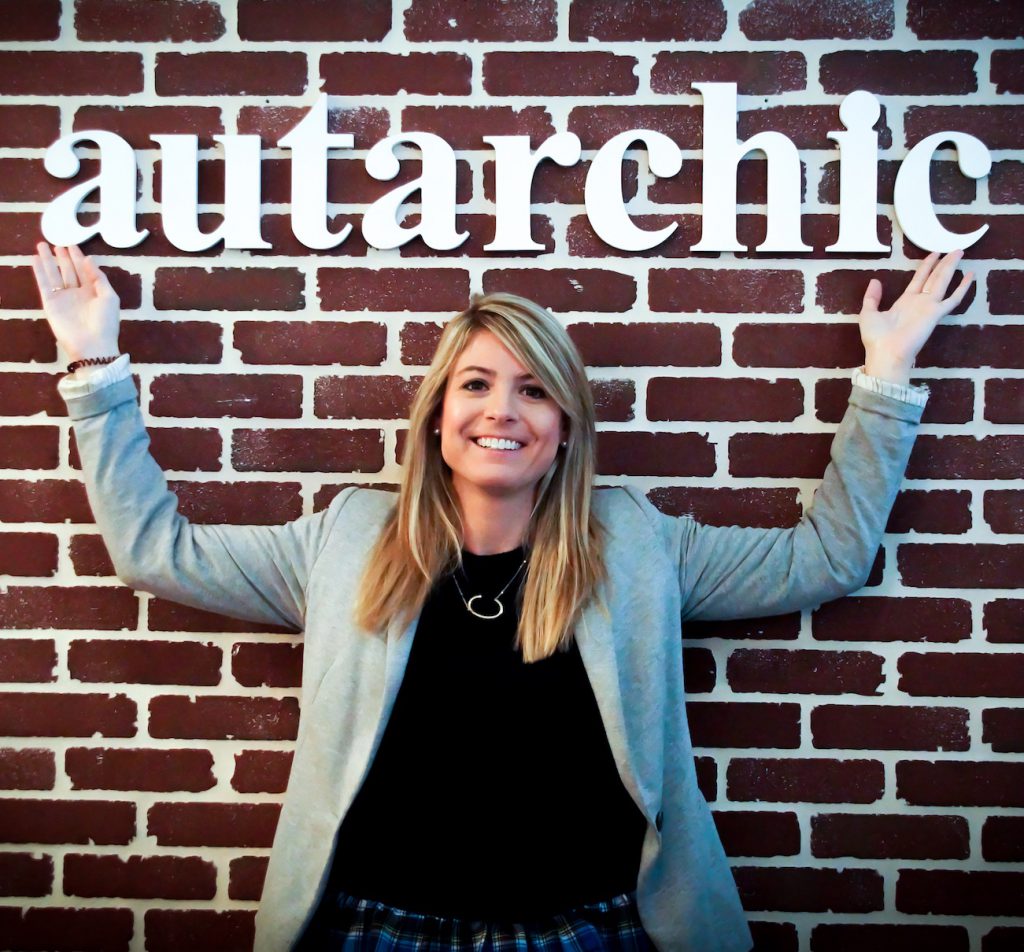
an interview with Dr. Courtney Dryer
Why Start Your Own Practice, Choosing Your Location with Care, and Finding the Funds
An interview with Courtney Dryer, OD, Autarchic Spec Shop, Charlotte, NC
Dr. Courtney Dryer shares her step-by-step approach to a successful cold start.
Dr. Courtney Dryer began her independent practice, Autarchic Spec Shop, six years ago in Charlotte, NC after realizing she wanted more control over day-to-day decision-making.
“I had worked for a doctor and saw things that could be improved or expanded,” she said in an interview at her chic practice off Woodlawn Road in Charlotte, NC. The inability to effect any changes “led to a certain amount of frustration. I like to have control over staff decisions, product decisions. When you own your own practice, you’re able to choose those things for yourself,” she explained. In this three-part blog series, Dr. Dryer shares a wealth of information – learned first-hand – about everything from the why to the how of opening a new practice.
In a nutshell, why did you decide to open your own practice when there were other options available to you?
I graduated in 2011, then worked for a private practice for a year, and also in some commercial practices on the weekend. I realized very quickly I didn’t see a future there. Once I made the decision to go independent, things happened pretty quickly: I opened my own high-end luxury practice in 2013 in Charlotte, NC.
For anyone looking to start their own practice, what’s the single most important question they should ask?
That question is “Why?” Why do you want to start your own practice? For me, it was freedom, the ability to make changes, updates and improvements as needed and without waiting for approval or acceptance from others. With a cold start you have ultimate control of your destiny and you alone are responsible for your success. Having your own practice means that you can enjoy unprecedented pride in your services and products; you can fulfill your unique vision for your practice to serve both your patients and your community; and you have the flexibility to travel when you want to and spend quality time with family.
What advice would you give about location. How much does that matter?
Location is very important. The first thing you should do is research lease rates for office space in the areas you’re interested in, and then compare different areas of the city or town to find the going rate for rental space. Having this comparative data allows room for negotiation with a landlord. I also suggest that you meet with landlords to gauge the potential relationship. Another question to ask is about patient base: What type of patient base do you want to serve? Primary? Medical? Pediatric? Geriatric? Check your area’s demographics to see if your practice location will be able to attract your patient base.
Another critical step in choosing a location is to determine the number of ODs, both commercial and private optometry practices in the area. Who’s going to be your competition?
When you meet with the landlord of each potential site to negotiate best price, ask if they will allocate any money toward your buildout.
Talk to existing tenants and ask four important questions:
- Are they happy with the landlord?
- How is business in their area?
- Would they do anything different?
- Anything they wished had been a part of their lease?
And a final note – very important! — before you sign your lease, have a lawyer review it to make sure it complies with industry standards.
How did you go about finding the necessary funds for starting your practice? Talk to us about that hurdle.
I always suggest that people find out if they qualify for any of the Small Business Association loans. In particular, check interest rates and see how they compare to standard bank loans. There are female-owned business loans that are available and they sometimes offer favorable rates.
Keep in mind that there are benefits to working with a small, local bank versus a large bank. Each bank has their own loan requirements, such as a necessary number of years out of school, or the mandatory hiring of a consultant. Larger banks may have other special requirements you might find onerous. Small banks can be easier to work with, according to colleagues who’ve gotten loans from those institutions.
Loans will be given based on financial status, how much debt is tied up in student loans, and amount of living expenses. The bank will ask for tax documents and proof of income from an outside employer. Keep in mind that most loans require a business owner to work at least three days outside of their own optometry practice so that there is some cash-flow and working capital.
Don’t miss part 2 of our series: Your To-Do List, Branding, and Marketing
Want to hear more tips for starting a new practice? Watch the 9 Essential Ingredients for Sucessfully Starting a New Practice.

A Short Conversation with Dr. Elizabeth Hoppe, ASCO President
Each July, ASCO swears in a new President to serve for the year. This year’s President, Dr. Elizabeth Hoppe, sat down with ASCO’s Director of Communications, Kimberly O’Sullivan to talk about the next twelve months.
Dr. Elizabeth Hoppe is a proud alumna of Ferris State University College of Optometry, graduating with the class of 1988. She earned a Master’s Degree in Public Health from Yale University, and a Doctorate in Public Health from the University of Michigan.
Dr. Hoppe has a true pioneering spirit, and along the way has accomplished several notable firsts. She is the first woman to complete the residency program at the Eastern Blind Rehabilitation Center at the West Haven, Connecticut VA. She is the first woman to hold both the OD degree and the Doctorate of Public Health. She is the first woman to earn a diplomate in the American Academy of Optometry’s Public Health and Environmental Optometry Section. She is the first woman to serve as the editor of the journal Optometric Education. In 2007 she became one of the first women to serve as the CEO and Dean of a College of Optometry in the United States, and one of only 22 individuals who has had the honor of serving as a founder of a College of Optometry in our professional history in the U.S.
ASCO: Dr. Hoppe, congratulations on being named ASCO President for fiscal year 2019-2020. What are you excited for most?
Dr. Elizabeth Hoppe: I am most excited to stretch and grow as I work to support creative strategies for ASCO to fulfill its organizational mission.
ASCO: What will be some of your top priorities this year?
EH: The quantity, quality, and diversity of our applicant pool remains a top priority for ASCO, and in fact overall for the future of our profession. We have put a lot of resources and support towards increasing awareness about our profession, targeting potential applicants. I am looking forward to seeing those efforts take off and expand over the coming year. I am thrilled to see, in less than four months, the metrics of the campaign are outstanding. The campaign continues to reach millions of potential students and engage these students through paid and social media, direct mail, the campaign’s landing page, www.futureeyedoc.com and other deliverables. I am excited to see the outreach grow larger these next several months.
ASCO is also working to increase opportunities for volunteerism, while also seeking greater recognition for our volunteers. We will be working on refreshing our organizational structure and updating our bylaws to capture the dynamics of our changing organization, while we also work to implement key elements of our strategic plan.
ASCO: Talk to me more about the Optometry Gives Me Life campaign. How is it going so far? How are the institutions involved? What outcomes are you hoping to achieve? Any results you can share with us so far?
EH: The campaign has made quite a splash within our Optometry community as we have begun sharing the materials as part of the roll out. Many schools are sharing the information within their networks, such as faculty members, alumni, and preceptors, along with including the campaign in their social media.
But the real reach isn’t our internal audiences – it is college-aged juniors who have expressed an interest in STEM careers. Just recently, our public relations firm showed us some early analytics from the campaign and they are very very encouraging.
For instance, in just a little over four months, our paid ads have been seen by more than 14 million people! The benchmark for click to open rates of these types of ads is 0.1 % and we are showing open rates of .14% — that’s 40% higher than average!
We feature short stories about three of our ODs through our futureeyedoc.com landing page and our viewing through completion rate is out of this world. The benchmark is 30% completion rate and we are showing a completion rate of 75.39% — 140% higher than average.
We are seeing a 151.5% increase in applications through our OptomCAS system compared to this time last year. The results are extremely promising.
ASCO: What drew you to optometry? What did you find most appealing about the field of optometry?
EH: Like many people, I really respected and admired my own home town optometrist. I knew that I wanted to do something in science and health care, and when my high school physics teacher suggested optometry as a good choice, it seemed like a natural fit because of my positive experiences with my own doctor. What I love most about the profession is how broad it really is. Whatever your passion, you can find your niche within optometry.
ASCO: If you were speaking with a student who is interested in becoming a Doctor of Optometry or with a student who has the aptitude but may not know about optometry, what advice would you give them?
EH: Visit a lot of different optometry practices. Find different practice emphasis areas and different practice modalities to learn more about the day-to-day experience. Talk with doctors of optometry and ask them to share more about their experiences and what they enjoy about their practices. Many years ago, when I was choosing to pursue optometry, visiting multiple practices was so beneficial. The thing that all of the different doctors had in common was a very high level of career satisfaction and they enjoyed going in to work every day.
ASCO: You are the founding Dean at Western University of Health Sciences, College of Optometry. Tell me about what you like about your institution and California, etc.
EH: The thing that I like best about being at a health sciences university is the opportunity to learn from, and to collaborate with, other health professions. There is so much wonderful information that you can learn when you talk with other health professionals and other health professions educators. And we get to contribute to them right back!
ASCO: I would think balancing your responsibilities at Western and your responsibilities with ASCO could be a challenge. How will you balance everything?
EH: I have a great administrative team at the College and I have a lot of confidence in them!
ASCO: We like to ask everyone we speak with to say something about the field of optometry that people may not know.
EH: Clinically, I love working in the field of rehabilitation. There are many ways that you can support people through optometric vision therapy, low vision rehabilitation, neuro-optometric rehabilitation, and care for vulnerable populations. When you practice in this area it challenges you to be at your highest levels and it also allows you to make the greatest difference. Working in rehabilitation allows you to literally change people’s lives by improving their ability to function and enhancing their quality of life.
ASCO: On a more personal note, tell us a little about your life outside of the workplace. What do you like to do outside of work?
EH: I love to take on DIY home decorating projects. We recently moved and I have been transforming the dining room into a home wine bar experience. I love to garden, with special emphasis on supporting wildlife such as butterflies and other pollinators, hummingbirds, and song birds. I am proud to say that even with limited space, I have been able to establish a National Wildlife Federation Certified Wildlife Habitat. I also love to help keep old, discarded furniture out of the land-fill by doing upscale re-purposing projects. Recent creations include a “glam martini bar” and a “wine and cheese portable island” which I donated for silent auctions to raise scholarship funds through our University. At home my most recent creations are an armoire dog kennel and a combined seating and storage banquet remake of an old dresser from the Salvation Army. I love any chance to use my power tools!
Thank you for your time Dr. Hoppe! We look forward to working with you!
written by Theresa Maher, ASCO intern

Dr. Shahab Motamedi
It was a typical day in May in Waldorf, Maryland.
Dr. Shahab Motamedi was seeing his last patient of the day one Saturday afternoon, and the patient asked if Motamedi could perform a comprehensive eye exam on his wife. He said he could, and when his patient brought his wife in, Dr. Motamedi realized she was blind.
As the patient and his wife explained that she was blind due to the toxicity of a drug used to address her lupus, Motamedi found that she also had a severe corneal disease known as keratoconus. The disease had never been addressed before they saw Motamedi.
Motamedi concentrates on fitting keratoconus contact lens in his practice, “and just looking at her cornea I knew her vision could be improved with scleral lenses,” Motamedi said. Motamedi put a trial lens on the woman’s eyes, and she started crying and shouted that she could see.
“I will never forget that moment,” Motamedi said, “because it was truly the best moment in my career.” That moment was filmed and shared and it went viral. The local Washington, DC Fox affiliate aired a story about the experience recently.
Motamedi said that the woman can now drive with a limited driver’s license and see her 11 year old son for the first time.
Motamedi graduated from the State University of New York with his OD in 2015. He graduated from college in 2008, when the economy was in a financial crisis—the worst economic disaster since the Great Depression, according to the Encyclopedia Britannica.
Motamedi took the DAT (Dental Admissions Test) because he initially thought he wanted to go to dental school, but was put on the waitlist for a few schools. Motamedi was then introduced to the field of optometry while he did research at the University of Pennsylvania. When Motamedi took the OAT (the Optometry Admissions Test), he did well and wasn’t thinking as much about dental school by then.
“I am really passionate about my profession,” Motamedi said, “much more than when I first started it.”
Motamedi says to hopeful Doctors of Optometry and anyone considering optometry as a profession that it’s a good one — it all depends on what you make out of it.
“My advice,” Motamedi said, “find a niche and be good at it!”
As for the future of optometry and Doctors of Optometry, Motamedi says that the standard of care has to remain high, and that Doctors of Optometry have to always be confident in their way of practice.
“Optometry will grow and will expand,” said Motamedi, “we all need to find out a way to be a part of it.”

Guest author Cassidy Webb is an avid writer and alcoholic in recovery. She advocates spreading awareness on the disease of addiction and alcoholism. Her passion in life is to help others by sharing her experience, strength, and hope.
The National Council on Alcoholism and Drug Dependence (NCADD) founded Alcohol Awareness Month in April 1987 to provide education, resources, and reduce the stigma that is so often associated with alcoholism. NCADD continues to sponsor Alcohol Awareness Month each April by encouraging the public to speak out about the dangers of alcohol abuse, alcoholism, and recovery. The theme this year is “help for today, hope for tomorrow.”
With binge drinking so common among students due to high levels of stress, the dangers of alcohol abuse can be destructive to your success in optometry school. As studies are an integral part of your future, it is important to be aware of the dangers of binge drinking, how stress influences drinking, and be able to identify whether or not you have a problem with alcohol.
Dangers of Binge Drinking
Among college students, binge drinking is a common, exhilarating weekend activity. Binge drinking is characterized by drinking a large amount of alcohol (more than 4 drinks for women, 5 drinks for men) within a period of two hours. The National Institute on Alcohol Abuse and Alcoholism found that nearly 60% of college students ages 18-22 drink alcohol monthly, and nearly two-thirds of this group reported that they engaged in binge drinking.
While this type of drinking may seem like a normal thing to do while in school, it poses some serious health risks that many are unaware of. The same study found that nearly 1,825 students ages 18-24 die from alcohol related injuries and 97,000 students are a victim of sexual assault or rape while alcohol is involved. Perhaps the most shocking finding from this study is that nearly 20% of college students are thought to have an alcohol use disorder, characterized by unhealthy alcohol consumption that may affect other areas of life.
Stress and Drinking
As alcohol is a central nervous system depressant, many find it effective in reducing stress and anxiety. The pressure from classes and professors can certainly place a lot of stress on students, especially when studying a specialized field such as optometry. These stress levels can dramatically increase around exam time, as students are hurriedly trying to pack in as much studying as possible. Stress can also be enhanced due to pressure from family to perform well, societal pressures, and relationships. When trying to balance all of these factors with school, stress can become heavy and abundant.
In order to manage stress in a healthy way, students should be aware of the resources that are available to them. Many schools are well-equipped with a mental health counselor who can provide guidance on how to effectively manage stress. Other ways that can help alleviate stress include physical fitness, proper nutrition and diet, yoga, meditation, time management and planning, and support groups.
Evaluate your Relationship with Alcohol
An important part of Alcohol Awareness Month will take place April 5-7th. This weekend is being considered Alcohol-Free Weekend which is an open invitation to participate in 72 hours of complete abstinence from alcohol. If you choose to participate and experience any discomfort or difficulty abstaining from alcohol during this time, it may indicate that you have a problem with alcohol. While differentiating between heavy drinking and alcoholism may prove difficult, you can evaluate your relationship with alcohol by asking yourself these questions:
- Has drinking caused problems with your family, friends, work, or studies?
- Have you continued to drink even when you know you shouldn’t?
- Have you tried to quit drinking, or control the amount you drink, but found yourself unable to stop or control it?
- Do you frequently experience a craving, or strong desire, to drink?
- Have you found yourself having to consume increasing amounts of alcohol in order to achieve the effects you desire?
- Have you placed drinking as a higher priority than things that are important to you – such as studying, classes, or other obligations?
- Have you found yourself experiencing withdrawal symptoms, like insomnia, nausea, shaking, sweating, depression, or irritability when you don’t drink?
If you answer yes to several or all of these questions, it is a good indication that your relationship with alcohol has become unhealthy and you may have an alcohol use disorder. If you think you have a problem with alcohol, it is essential to get the help you need before it causes detrimental effects on your health, your education, or your future career.
With the opioid crisis taking over news headlines today, it is easy to forget that alcohol still poses serious dangers to those who abuse it. It is imperative to provide education about the risks of binge drinking among students as well as resources to those who need help with an alcohol use disorder.