
ASCO News
 ROCKVILLE, MD, June 30, 2016 – The Association of Schools and Colleges of Optometry (ASCO) is pleased to announce the recipients of the 2016 Special Recognition Awards.
A 2016 Rising Star Award is given to Dr. Nicole Ross, Assistant Professor of Optometry at the New England College of Optometry (NECO).
Generously sponsored by Oculus, the ASCO Rising Star Award is given to an outstanding faculty member or administrator with less than seven years of service who has made noteworthy contributions to fulfilling the mission, strategic objectives or programs of ASCO.
Dr. Ross is recognized for her outstanding contributions to NECO through teaching, scholarship, administration and professional service and most noticeably in contributions to ASCO’s Low Vision Special Interest Group.
“It is both a pleasure and an honor to be involved in the care of patients with visual impairment and educating future colleagues who will continue to grow and move this field forward,” says Dr. Ross.
Additional awardees are: ASCO Lifetime Achievement Award, Dr. Morris Berman, Southern California College of Optometry at Marshall B. Ketchum University; Industry Leadership Award, R. Mike Daley, The Vision Council; and additional ASCO Rising Star Award, Dr. Nathan Lighthizer, Northeastern State University – Oklahoma College of Optometry.
Dr. Ross and her fellow awardees were recognized during ASCO’s Annual Luncheon on Wednesday, June 29 in Boston, MA.
###
The Association of Schools and Colleges of Optometry (ASCO) is a non-profit association representing the interests of optometric education. Founded in 1941 and headquartered in Rockville, MD, ASCO is committed to achieving excellence in optometric education and to helping its member institutions prepare well-qualified graduates for entrance into the profession of optometry. Its membership encompasses the schools and colleges of optometry in the 50 states and Puerto Rico. A number of optometry schools outside the United States are affiliate members.

Photo by Jo McCulty
The Ohio State University
A Short Conversation with Dr. Karla Zadnik, ASCO President
Each July, ASCO swears in a new President to serve for the year. This year’s President, Dr. Karla Zadnik, sat down with ASCO’s Director of Communications to talk about the next twelve months.
At The Ohio State University College of Optometry for more than 20 years working up the faculty ranks, Dr. Zadnik was named Dean of the College of Optometry in 2014 and is also the Executive Dean of the Health Science Colleges at Ohio State. She is also the Glenn A. Fry Professor of Optometry and Physiology Optics at Ohio State and received a Distinguished Scholar Award in 2010 from the university. She received her OD and PhD degrees from the University of California, Berkeley School of Optometry, is a Fellow of the American Academy of Optometry, and served as the Academy’s President from 2011 to 2012.
ASCO: Dr. Zadnik, congratulations on being named ASCO President for fiscal year 2016-2017. What excites you the most and what do you think will challenge you the most this year?
Dr. Karla Zadnik: Thank you. I am looking forward to the challenge provided by the ASCO’s Presidency. What excites me the most as I look toward the upcoming year is working on the ASCO Strategic Plan. ASCO hasn’t had a new Strategic Plan in 14 years, and it’s time to attend to this important initiative and look ahead to and plan for the future. I am excited to lead the strategic planning process for the organization.
ASCO: What will be your main priorities this year?
KZ: We will play to our strengths and continue to work on projects we have already started. I like the idea that ASCO will help its Board members, who are Deans and Presidents of our 23 optometric institutions, become better Deans and Presidents, but I am equally excited at the thought of helping our institutions’ Chief Academic Officers become better leaders. We have initiatives, such as the Summer Institute for Faculty Development, that help new faculty gain knowledge and enhance the skills that will lead to a successful academic career. We also want to give other administrators the necessary training so they too are successful through workshops, webinars, tutorials, mentoring, onsite training, and leadership seminars. ASCO will help enrich its Board members and other members.
ASCO: How will ASCO staff help in implementing the Plan?
KZ: ASCO staff is vital to its successful implementation. The organizations I have led are different than my day job. Those on ASCO’s committees, task forces, and Special Interest Groups are volunteers. Even the simplest ideas by volunteers would be impossible to implement. We need staff to implement them. Staff is vital in any volunteer organization to really get the work done.
ASCO: Let’s talk about optometry and optometric education. Where did your passion for optometric education come from? What appealed to you about the field of optometry in general?
KZ: My story may be trite, but it’s true. My paternal grandfather was an optometrist. He died at 91, when I was 16. He practiced in Stow, Ohio in a practice in the basement of his house. After he died I declared I would also become an optometrist. After I graduated from high school, we moved to California, where I completed my undergraduate prerequisites and then went to UC Berkeley for optometry school.
I completed a rotation in specialty contact lenses during my fourth year at Berkeley Optometry that changed my career trajectory. After my rotation was over, the supervising optometrist asked if I would be interested in more hands-on learning in the Department of Ophthalmology at Stanford University. After fitting an aphakic baby with contact lenses in the operating room, I was hooked. When the same kind of position opened up at the University of California, Davis, I delivered direct patient care in the areas of specialty contact lenses, anterior segment, and low vision.
I loved the job at Davis but didn’t get bitten by the “academic bug” until after I published a paper or two and received encouraging feedback. I loved that I could perform some research, write a paper, a journal would publish it, and people would read it and learn something from it. I thought, “Oh, this is so cool.”
That is when I started to ramp up my academic activities and received invitations to speak at conferences and seminars. I became a fellow in the American Academy of Optometry and then a Diplomate in its Section on Cornea and Contact Lenses, but I was in a department of ophthalmology, and I was an optometrist, which limited my future. That’s when I applied for a training grant slot at Berkeley to work toward my PhD. Entering academia was the best decision I have ever made. The timing was right. I had a three-year old daughter when I started graduate school and had my second daughter while attending graduate school. My husband was extraordinarily supportive through it all; he still is.
People ask me how I balance it all. My response is: Somehow, you just do.
ASCO: What piece of advice would you give to a student who is interested in becoming a Doctor of Optometry or a student who has the aptitude but may not know about optometry?
KZ: For those who want to be an optometrist, the emphasis should be “academics first” as he or she moves toward optometry school. Being well grounded in the math and sciences opens all the doors, including the doors to optometry school. It makes the path to optometry school course work that much easier. There is NO substitute for hard academic work in the sciences for getting into optometry school.
For the latter, for people who are changing careers or majoring in something other than the sciences, I would tell them about all the opportunities they have to work with people. Math and science academic competence is required, but there is also the small business aspect to optometry as a career. If someone has an entrepreneurial spirit, I would suggest optometry as a career.
For both groups of people, those who are on the optometry track during college and those who discover it later in life, I tell them optometry is a happy profession. We can help most of the people most of the time. We are mostly fixers; people have things we can treat. Optometrists make a good living, and they make that living by helping people in a very significant way.
ASCO: On a more personal note, tell us about you a little. What was the last vacation you took? Last good book you read; any hobbies, etc.
KZ: My main hobby is quilting. I have been making large and small quilts and machine sewing them for 18 years. My favorite vacation spot is Nantucket, MA. It’s been an important place to my family ever since we celebrated my parent’s 50th wedding anniversary there in 1989. Kurt, my husband, and I have been married for 37 years and we have two daughters, Andra and Nina. Andra just got married in California. We are a small family, but we are a deeply connected family.
Every other summer we host the Summer Research Institute, co-sponsored by the American Optometric Association and the American Academy of Optometry, and this year we had a lobster dinner in our backyard for 50 people. It was a magical night—perfect weather and literally hundreds of fireflies in the grass and the trees. I like to think the future of optometric research was eating lobster at my house.
ASCO: And lastly, I’d be remiss if I don’t talk about The Ohio State, specifically sports. Are you an OSU sports fan? How do you think the teams will do this year? Planning on going to any games? What is your favorite sport?
KZ: It is impossible to move to this institution and NOT be an Ohio State sports fan! Of course you think of the football team when you think of Ohio State and the Big Ten. We are, of course, fans of the football team, but we also hold season tickets to men’s and women’s basketball. People may be surprised how great the women are doing – check them out on the Big Ten channel. They are great fun to watch.
ASCO: Thank you for your time Dr. Karla Zadnik!
 ASCO’s 2016 Annual Luncheon Trivia Contest Rules
Trivia question: How many students combined have graduated from an ASCO optometric institution since 1941?
- Must be present at the Annual Luncheon on June 29 in Boston to win
- Must submit your answer by the deadline: June 29 2:00 pm eastern time either via ASCO’s twitter feed @optometriced or designated ASCO staff onsite at the luncheon
- If there are two correct answers, the first person to Tweet or hands in their answer wins
- You can not go over the correct number
Thanks for participating and celebrating in the fun!
 Recently Kim O’Sullivan, ASCO’s Director of Communications, sat down with Dawn Mancuso, MAM, CAE, FASAE, to discuss her recent appointment as ASCO’s Executive Director.
ASCO: What appealed to you about the position and what are you most looking forward to?
DAWN: Wow, I could go on and on with this question! There is so much good stuff going on at ASCO – and great opportunity to do more. I believe my communications background and experience working in associations, largely in the healthcare field, have prepared me in a very unique way for my position. When I met with the search committee and the Board of Directors, I detected a strong sense of comradery, of community, that is very attractive to anyone working within an association. On top of all that, I am excited to learn and be involved with a new (to me) set of public policy issues surrounding higher education.
ASCO: You started full time as ED on August 31st. How has it been so far?
DAWN: It’s been a real whirlwind. Very exciting! In the first 10 weeks, there has been quite a bit of travel and a barrage of meetings: two board meetings, two Executive Committee meetings, one IOCCC meeting, and somewhere around 20 meetings of either committees or special interest groups. And, that doesn’t include a number of advocacy meetings here in D.C. But I’ve loved every minute of it…these meetings have been a great way for me to meet folks, get acquainted with our dedicated volunteers, and learn the issues facing the profession.
ASCO: What will you focus on during your first 90 days at ASCO?
DAWN: Well, those first 90 days are quickly coming to a close. I’ve really had to focus on the emergent things at hand – especially the preparation for and participation in all of the meetings I mentioned above. I have been working hard to “be a sponge” and learn as much as possible about the issues and challenges facing the profession as well as the educational institutions we represent. Thankfully, I have a phenomenal (and patient) group of board members and staff members supporting me and the organization during this time.
ASCO: ASCO’s previous ED retired after almost 25 years. That’s a huge accomplishment. How do you build on those past 25 years?
DAWN: I am very lucky to have inherited an organization as well run and in such a strong position as ASCO. I have worked in several “turn around” situations before, so I know just how much work it took my predecessor (Marty Wall) to put ASCO on such firm footing. It means that the staff and volunteers are now free to focus our attention on the future. So, we’ve committed to spending some time in the year ahead working on a new strategic plan for ASCO that will intentionally advance the ability of our member schools and colleges to meet the educational needs of the Doctor of Optometry profession tomorrow and beyond.
ASCO: How will you ensure your priorities and the Board of Directors’ priorities are implemented?
DAWN: Implementation is the primary responsibility of any Executive Director. Our goal is to build a strategic plan that it a living, working document. It should and will drive priority initiatives, annual work plans and budgets for the Association. Once the plan is developed, I’ll be working closely with the rest of the staff and the committees/special interest groups to design reporting mechanisms that help us measure our progress as well as ways to communicate that progress to a wide variety of audiences.
ASCO: Where did your interest for association management come from?
DAWN: That’s a long story! I’ve been doing association management work since 1982, so over 30 years. Most people are surprised when I tell them that. I’m hoping it’s because they think I look younger than I am. [laughs] Truth be told, I accidentally got involved in the field. I worked my way through undergraduate university doing editorial work, and worked on the school paper, so I had developed sufficient writing skills to get a job at a newspaper upon graduation. Unfortunately, it was an afternoon daily paper that, like all afternoon dailies, was facing real economic hardships due to changes in how the public got their news. When the paper folded, I helped close down the office and started looking everywhere for my next job – which turned out to be an editorial position with my first association, a professional society in the healthcare field. I didn’t really understand what an association did, and I certainly didn’t know anything about the profession represented by the association. But, I loved it; every day was different, I got to be nosy about what other people did for a living, and I got to help people do what they do better. You get to work with the best, the brightest, the most dedicated volunteers in the profession. I was hooked, and never looked back…and have been thankful ever since that I was so lucky. I eventually went on and got my Master’s degree in Association Management from George Washington University, and attained the Certified Association Executive credential from the American Society of Association Executives (ASAE), which has since named me as a Fellow. Several years back, I was asked to serve on the ASAE Board of Directors, which was such an honor, a learning experience without parallel, and a great way to give back to the profession I have continued to enjoy for so many years.
ASCO: Has anything surprised or intrigued you about optometric education that you didn’t know before?
DAWN: The theory behind association management is that the best associations are successful because of a strong partnership between the members, who are the content experts, and the staff, who are the operational experts. So, I came to ASCO clearly appreciating that I am far from an expert on optometric education. That said, I am interested and intrigued in learning as much as possible about it, as well as the educational approach that other health professions take. Sometimes the best ideas will come from an organization in a parallel field.
ASCO: On a more personal note, tell us about you a little. What was the last vacation you took? Last good book you read? Any hobbies? Etc.
DAWN: I love to travel, especially internationally. (My undergraduate degree was in international relations.) I’ve visited about 20 different countries so far. I love to read, too, and usually have 3 or 4 books going at the same time, although one book is always my “primary” read. I try to alternate the kind of book that it is – a novel, then business management/non-fiction, then back to a novel. I also do volunteer work. I’m a devoted animal lover, so I’ve married that interest with my volunteer work and currently serve on the Board of Directors for a small non-profit in the D.C. area that tries to help people in need with therapy dogs and other animals. I’m a trained strategic planning facilitator, so I’ve consulted with other non-profits in managing their strategic planning processes. I’ve just started dabbling in genealogy in an attempt to put together my family tree. I’m also an avid gardener – and like to cook with the bounty of vegetables and spices. I’ve been known to make a mean pesto!
###
 |
| Dr. Alfred A. Rosenbloom |
 |
| Dr. Todd Peabody |
 |
| Dr. Mark Colip |
 |
| Mr. Dave Sattler |
 |
| Dr. Denise Goodwin |
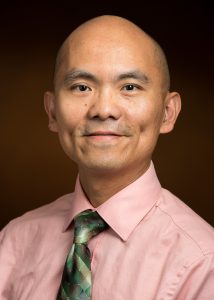 |
| Dr. Len Koh |
 |
| Dr. Molly Spatcher |
Lifetime Achievement Award Given Posthumously to Dr. Alfred A. Rosenbloom, Jr.
ROCKVILLE, MD, July 14, 2015 – The Association of Schools and Colleges of Optometry (ASCO) is pleased to announce the recipients of the 2015 Special Recognition Awards.
ASCO Lifetime Achievement Award
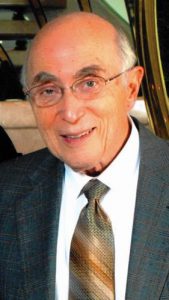
Dr. Alfred A. Rosenbloom, former Dean and President of the Illinois College of Optometry, was posthumously given the ASCO Lifetime Achievement Award. This award recognizes an outstanding individual who over an extended period of time provided exceptional leadership to ASCO and to optometric education; made outstanding contributions to the optometric community, and displayed exemplary commitment and dedication to the association.
The family of Dr. Alfred A. Rosenbloom, Jr. accepted his Life Achievement Award during ASCO’s Annual Meeting in Seattle. “I am honored to accept this award on his behalf and know Al would truly appreciate it,” says Dr. Rosenbloom’s wife Sarah.
ASCO Rising Star Award
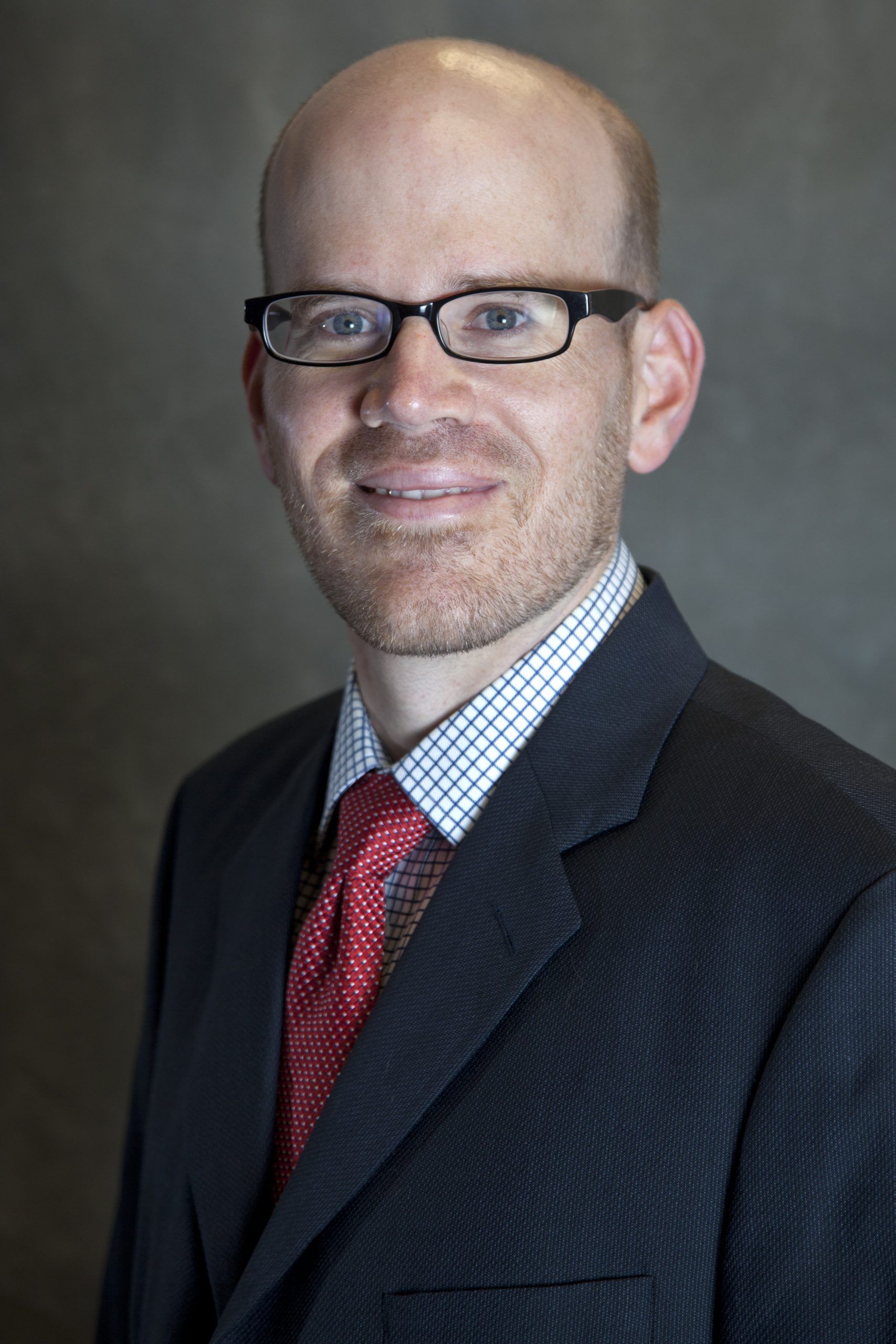
Sponsored by Oculus, the ASCO Rising Star Award is given to an outstanding faculty member or administrator with less than 10 years of service. Dr. Todd Peabody was recognized for his outstanding contributions to the Indiana University, School of Optometry, through teaching, scholarship, administration and professional service particularly in the areas of international optometric education and technology and most notably in contributions to ASCO’s Education Technology SIG.
“I am honored and humbled to receive this recognition. I consider myself privileged to have the opportunity to have the mentorship of outstanding colleagues and the dedication of committed students,” says Dr. Peabody. “I share this commendation with the entire faculty, staff and student body at Indiana University School of Optometry. Thank you to the ASCO Board of Directors and Executive Committee for this special award.”
Dr. Jack Bennett Innovation in Optometric Education Award
Named after Dr. Jack Bennett, a creative leader in optometric education who served as dean at three optometric institutions, ASCO’s Dr. Jack Bennett Innovation in Optometric Education Award recognizes an ASCO volunteer for an outstanding innovation in optometric education through ASCO.
Dr. Mark Colip received the Bennett award in recognition of his outstanding work as an ASCO volunteer since the 1990’s focusing on analysis of applicant pool trends and data leading to the formulation of applicant development action plans to increase and diversify the national applicant pool.
“I am humbled and deeply appreciative to receive this recognition by the ASCO Board of Directors. Dr. Jack Bennett was a great man and creative leader that I had the privilege of knowing. His dedication inspired the early development of my career and I can’t think of a greater honor than to receive an award named for his legacy,” says Dr. Colip.
ASCO Ophthalmic Industry Leadership Award
The ASCO Ophthalmic Industry Leadership Award recognizes an individual from a current or past Corporate Contributor partner company that demonstrates exemplary support of ASCO and its member institutions. The individual serves as an example for his/her colleagues in industry; and has made exceptional and meaningful contributions to the advancement of ASCO and optometric education.
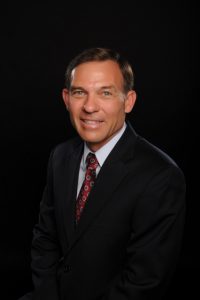
The Inaugural Industry Leadership Awardee is Mr. Dave Sattler, former Director of Professional Relations at Alcon. Mr. Sattler retired from Alcon in 2014 after 28 years of service.
“I am very honored to receive the first Industry Leadership Award from ASCO,” according to Mr. Sattler. “The programs we developed together with all of the schools and colleges of optometry would not have been possible without the ongoing support of Alcon. Thanks so much for the recognition!”
Dr. Lester Janoff Award for Writing Excellence
The recipients of the Dr. Lester Janoff Award for Writing Excellence are: Denise Goodwin, OD, FAAO and John R. Hayes, PhD both with Pacific University College of Optometry; and Len Koh, PhD, OD, of Midwestern University, Arizona College of Optometry. This award recognizes the outstanding writing of a research article published in the ASCO Journal Optometric Education. Their article was entitled, “Blended Learning in Optometric Clinical Procedures Instruction,” and was published in the Winter/Spring 2014 edition.
“I am thrilled to be selected for this prestigious award. There are so many great articles and writers in Optometric Education. I am honored to be numbered among them,” says Dr. Goodwin.
“On behalf of my coauthors, Drs. Denise Goodwin and John Hayes Jr., we are thrilled to be selected for this prestigious award among many excellent writers and articles published in Optometric Education. Thank you very much to the selection committee, Dr. Denial and ASCO,” according to Dr. Koh.
The award is named in honor of Dr. Lester E. Janoff, editor of the journal from 2002-2005, and long-time member of the editorial review board who was known as an exceptional optometric educator, administrator, contact lens clinician and researcher. Dr. Janoff was also a beloved mentor of young writers.
Student Award in Clinical Ethics
Sponsored by International Vision Expo, optometry student Molly Spatcher (New England College of Optometry class of 2015) won the award for her essay entitled, “Going Nuclear: An Ethical Dilemma in Optometric Care.” Her essay was published in the Spring 2015 issue of Eye on Education and will appear in the Summer 2015 issue of Optometric Education.
“My paper presented the case of a nuclear engineer who was struggling to come to terms with his recent loss of vision and was worried about the effect it might have on his ability to continue working. This case posed an ethical dilemma to the optometrist because there was a need to maintain the patient’s confidentiality but given that he worked in a nuclear facility, he also posed a threat to public safety,” according to Dr. Spatcher. “The ethics of clinical care are worthy of consideration because they can play a vital role in individual patient management but while also reflecting on the state of the profession as a whole.”
###
The Association of Schools and Colleges of Optometry (ASCO) is a non-profit association representing the interests of optometric education. Founded in 1941 and headquartered in Rockville, MD, ASCO is committed to achieving excellence in optometric education and to helping its member institutions prepare well-qualified graduates for entrance into the profession of optometry. Its membership encompasses the schools and colleges of optometry in the 50 states and Puerto Rico. A number of optometry schools outside the United States are affiliate members.
 Recently ASCO’s Director of Communications sat down with Dr. David Heath to discuss his role as ASCO President.
Dr. Heath has been the President of the SUNY College of Optometry in New York City since 2007. Prior to joining SUNY, Dr. Heath served as vice president and dean of academic affairs at the New England College of Optometry. Dr. Heath has a Doctor of Optometry from The New England College of Optometry and a Masters in Education from Harvard University.
___
ASCO: Dr. Heath, you were ASCO President for fiscal year 2012-2013 and now you’re President again this year. Welcome back. What changes have you seen in optometric education in these past years?
Dr. Heath: First let me say that I am honored that I was asked to serve a second stint as ASCO’s President. I’ve been involved with ASCO throughout my career and believe strongly in the leadership role it plays in the advancement of our profession.
It’s actually only been two years since I finished my first term, but there have been changes. The changes are more within our healthcare and educational environments, than within optometric education per se. With the continued evolution of health care reform, expanding scopes of practice, the expectations for Interprofessional Practice (IPP) and emerging technologies, the future practice of optometry will be fundamentally different from what it is today. It is incumbent upon ASCO and its member institutions to anticipate those changes and educate our students for future practice – I think our Deans and Presidents are more than ready for the challenge.
ASCO: What will be your main priorities this year and how have they changed and evolved since 2012?
Dr. Heath: This year is ASCO’s 75th Anniversary. Anniversaries serve as milestones and often cause us to look back and reflect. In ASCO’s case, our 75th coincides with a significant transition of leadership within the organization and, while mindful of our past, it will serve as a catalyst to look forward. I like to believe that ASCO has changed significantly in the last several years; becoming far more proactive and demonstrating leadership both within our profession and outside of it through developing relationships with other health profession organizations.
During the coming year, while continuing the many programs we already deliver, we will be conducting a comprehensive strategic planning process which will set the stage for ASCO’s future. This process, combined with the assimilation of our new Executive Director into the organization, pretty much fills the plate for the year ahead. That said, I would highlight one event in particular. We will be tackling an issue that has really emerged over the past few years and that is the challenge of preparing our students for collaborative, team-based care through interprofessional education (IPE). Dr. Jenny Coyle, now our immediate past-president, has been a leading voice for ASCO’s involvement with IPE and she will be leading a Summit on Interprofessional Education that will take place in Fullerton, California in early February. I think it’s going to be a terrific program and it is very timely.
ASCO: How will ASCO staff help in implementing your priorities?
Dr. Heath: First it is important to recognize that the staff in any association that depends upon volunteerism is absolutely essential in advancing the organization. We’re very fortunate to have a top-notch staff at ASCO who have done a fabulous job. We couldn’t do what we do without them.
As the coming year will include the first change of Executive Directors in nearly 25 years and the initiation of the strategic planning process, changes will occur and priorities will shift. While change can sometimes cause angst, it can also open up tremendous opportunities for our organization and those who serve it. The ASCO staff can be most helpful, first by continuing to do what they have been doing so well, but also by embracing change and the opportunities that can come with it.
ASCO: Speaking of ASCO staff, we’d be remiss if we didn’t bring up a very big change in the ASCO administrative office. After nearly 25 years, Executive Director Marty Wall is retiring and Dawn Mancuso has been appointed Executive Director. She will begin her tenure with ASCO on August 31. Tell us a little bit about Ms. Mancuso and why she was chosen as ED.
Dr. Heath: I was so pleased when I heard that Dawn had accepted the position of ASCO Executive Director. She brings a real depth of experience as an association executive along with a strong background in strategic planning and experience with the healthcare sector. During the interview process, Dawn seemed to naturally connect with the entire community. It was very easy to see that she would fit in well. Interestingly as happenstance would have it, I’ve crossed paths with a couple of association executives who knew of Dawn from the American Society of Association Executives; both shared (unsolicited) that we had found a terrific ED. I’m really looking forward to working with her during the coming year. You should do one of these with her!
ASCO: What are you looking forward to the most this year?
Dr. Heath: I am honored at being asked to serve as President for a second go round. That said, I believe my role is to lead during a period of significant transition and to set the stage for the future by working with and, indeed, supporting the entire organization in the strategic planning process. What am I looking forward to? I’m looking forward to looking back and seeing that we have accomplished what we set out to do.
ASCO: Where did your passion for optometric education come from?
Dr. Heath: I’m not sure I can point to a specific source of inspiration, but I do know that being involved in optometric education and serving in leadership roles allows me to merge a lot of interests while knowing that I can make a significant impact in advancing the profession. Over my career I’ve had many roles, but I’ve always been able to positively affect patients, students, faculty and others both on an individual level and by effecting improvement at the programmatic and the institutional level as well. As President of the SUNY College of Optometry, I get to do it all, it’s a real joy.
ASCO: What piece of advice would you give to a student who is interested in becoming an optometrist? Or a student who has the aptitude but may not know about optometry?
Dr. Heath: Obviously, I think optometry is great profession and I would encourage anyone interested in the health professions to consider it. The one recommendation that I would emphasize for anyone considering a health profession as a career is to research, research and do more research about the future of health care and specifically about the field they are interested in. Most candidates for admission do visit practices and shadow the doc to get a sense of “a day in the life” of the optometrist. The reality though is that what they see today may not be what they are getting tomorrow, so it is important that they try to understand future trends and how those trends may impact the future delivery of care. That’s actually a tall order for someone in the middle of their college years. Optometry is a fantastic profession, but they do need to be prepared for ever present change.
ASCO: On a more personal note, tell us about you a little. What was the last vacation you took? Last good book you read; any hobbies, etc.
Dr. Heath: I probably don’t take vacations as often as I should, but your timing is great. My wife, Jeannine and I just took two weeks in early May to go to Italy. We hit the key cities of Rome, Florence and Venice and it was wonderful. Unfortunately our last big vacation was four years before that. I have to admit that I don’t have much time for hobbies, but I grab rounds of golf whenever I can and junk mystery novels are my airplane vice.
Dr. David Heath
ROCKVILLE, MD, June 25, 2015 – Dr. David Heath, President of the State University of New York College of Optometry, has been elected President of the Association of Schools and Colleges of Optometry (ASCO). ASCO comprises of the 21 schools and colleges of optometry in the United States and Puerto Rico.
Dr. Heath previously served as President of ASCO during the 2012-2013 academic year.
Dr. Heath has been involved in optometric education since 1984 and has been a member of ASCO’s Board of Directors since 2007. He is also active with the American Optometric Association and the New York State Optometric Association.
“The coming year at ASCO will be one of transition and opportunity as our new executive director, Ms. Dawn Mancuso, begins her tenure and as we initiate a comprehensive strategic planning process,” President Heath says. “This is an important time as we enter ASCO’s 75th year as an association. As a community, we will embrace this transition as an opportunity to increase the impact of ASCO and to advance optometric education.”
ASCO’s Board of Directors also elected its Executive Committee during its Annual Meeting in Seattle. Elected are: President-Elect, Karla Zadnik, OD, PhD, FAAO, Dean and Professor, Ohio State University, College of Optometry; Secretary-Treasurer, Elizabeth Hoppe OD, MPH, DrPH, Founding Dean, Western University of Health Sciences, College of Optometry; At-Large Member, David A. Damari, OD, Dean, Michigan College of Optometry at Ferris State University; and Immediate Past-President, Jennifer Coyle, OD, MS, Dean, Pacific University, College of Optometry.
Dr. Heath begins his term as president on July 1, 2015.
###
The Association of Schools and Colleges of Optometry (ASCO) is a non-profit association representing the interests of optometric education. Founded in 1941 and headquartered in Rockville, MD, ASCO is committed to achieving excellence in optometric education and to helping its member institutions prepare well-qualified graduates for entrance into the profession of optometry. Its membership encompasses the schools and colleges of optometry in the 50 states and Puerto Rico. A number of optometry schools outside the United States are affiliate members.
ROCKVILLE, MD, June 16, 2015 – The Association of Schools and Colleges of Optometry’s (ASCO) Board of Directors is pleased to announce the appointment of Dawn Mancuso, MAM, CAE, FASAE, as its Executive Director.
Ms. Mancuso replaces Marty Wall who is retiring in July.
A seasoned leader in the non-profit association industry and the former Chief Executive Officer of the Hydrocephalus Association, Mancuso will serve as the lead executive responsible for the administration, operations and representation of ASCO with all member institutions and affiliates in optometric education. She will also continue the association’s strong collaborations with other organizations in the profession and forge partnerships with other associations of health professions education to create greater visibility for optometry in the changing healthcare landscape.
“Dawn brings to ASCO her depth of experience in association management and her extensive expertise in successful strategic planning and implementation,” according to Dr. Jennifer Coyle, ASCO President and Dean of the College of Optometry at Pacific University. “We look forward to having her be an integral part of ASCO.”
“I am truly honored to be joining the great team at ASCO and excited about the opportunity to use my skills and experience to advance the importance of optometric education to both patients and the medical community,” said Dawn Mancuso.
“I am very fortunate to be coming on board with such a healthy and well regarded organization, which is a true testament to the hard work of Marty Wall and the board,” she added.
Ms. Mancuso’s first day will be August 31.
###
The Association of Schools and Colleges of Optometry (ASCO) is a non-profit association representing the interests of optometric education. Founded in 1941 and headquartered in Rockville, MD, ASCO is committed to achieving excellence in optometric education and to helping its member institutions prepare well-qualified graduates for entrance into the profession of optometry. Its membership encompasses the schools and colleges of optometry in the 50 states and Puerto Rico. A number of optometry schools outside the United States are affiliate members.

Marty Wall (r) receiving his honorary degree, presented to him by Dr. Bart Campbell, SCO’s Interim Vice President for Academic Affairs
ROCKVILLE, MD, May 12, 2015 – The Association of Schools and Colleges of Optometry’s (ASCO) Executive Director, Marty Wall, was an honorary degree recipient of the Doctor of Humane Letters at Southern College of Optometry’s (SCO) graduation ceremony on May 8.
Marty was given this prestigious degree to commemorate his distinguished career in academic optometry, specifically as ASCO’s Executive Director for almost 25 years.
“Marty has distinguished himself as a leader in the Association world and has been our leader for decades,” says Lewis Reich, OD, PhD Interim President, Southern College of Optometry. “Everyone at SCO welcomed the opportunity to show our gratitude and respect to Marty in this way.”
“As I complete nearly 25 years as ASCO’s Executive Director it is an incredible and unexpected honor to be awarded an honorary Doctoral degree from SCO,” says Marty. “It has been a pleasure and privilege to have served and represented the schools and colleges of optometry for so long and to have participated in the development of ASCO as the leadership organization representing the optometric academic enterprise. Interim President Reich, previous Presidents Cochran and Phillips, and the SCO staff and faculty have been most gracious and kind to me from the time I began at ASCO. This special honor is a highlight of my association career and I thank everyone involved and all those in optometric education and the profession who have extended their well wishes as I begin this next life phase.”
Marty Wall begins his retirement on July 18.
###
The Association of Schools and Colleges of Optometry (ASCO) is a non-profit association representing the interests of optometric education. Founded in 1941 and headquartered in Rockville, MD, ASCO is committed to achieving excellence in optometric education and to helping its member institutions prepare well-qualified graduates for entrance into the profession of optometry. Its membership encompasses the schools and colleges of optometry in the 50 states and Puerto Rico. A number of optometry schools outside the United States are affiliate members.